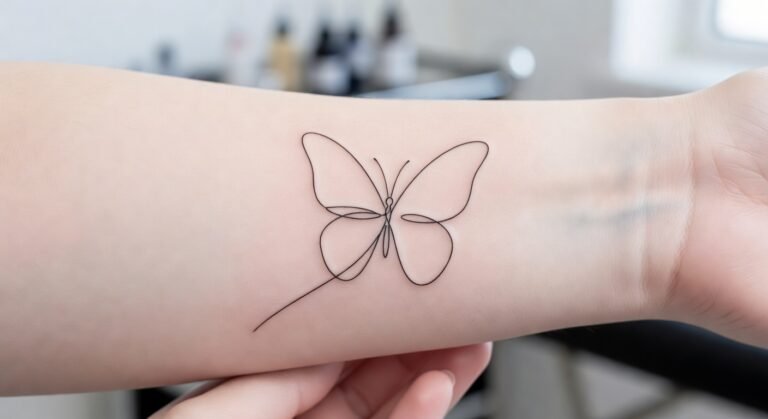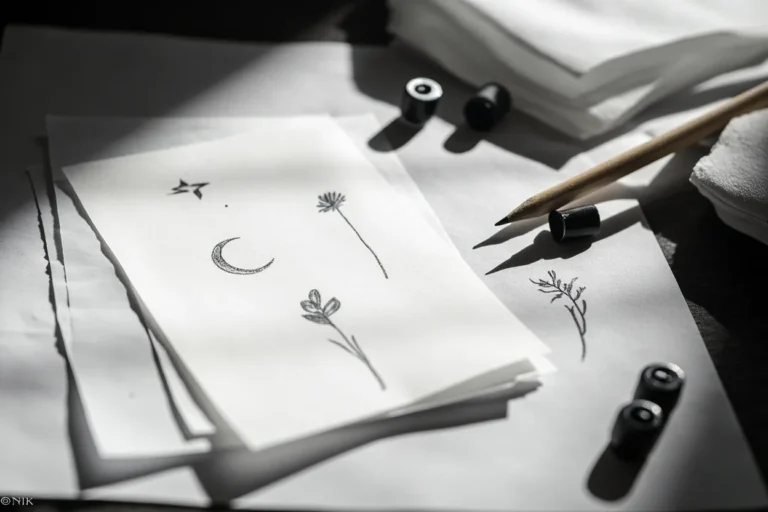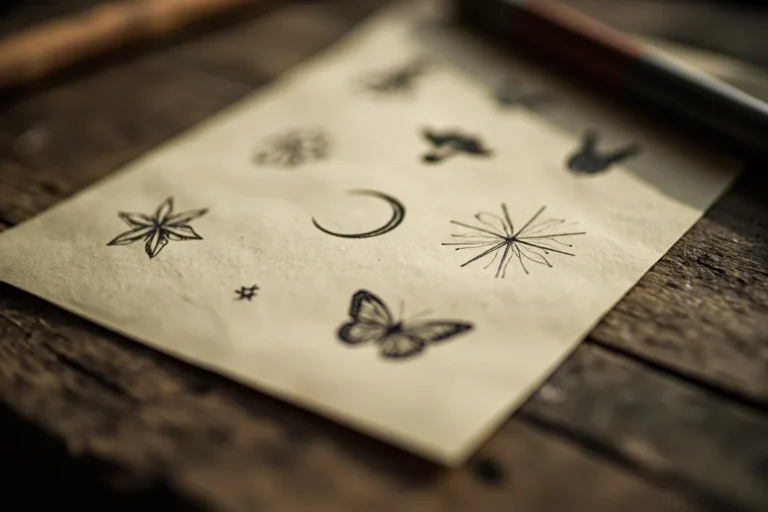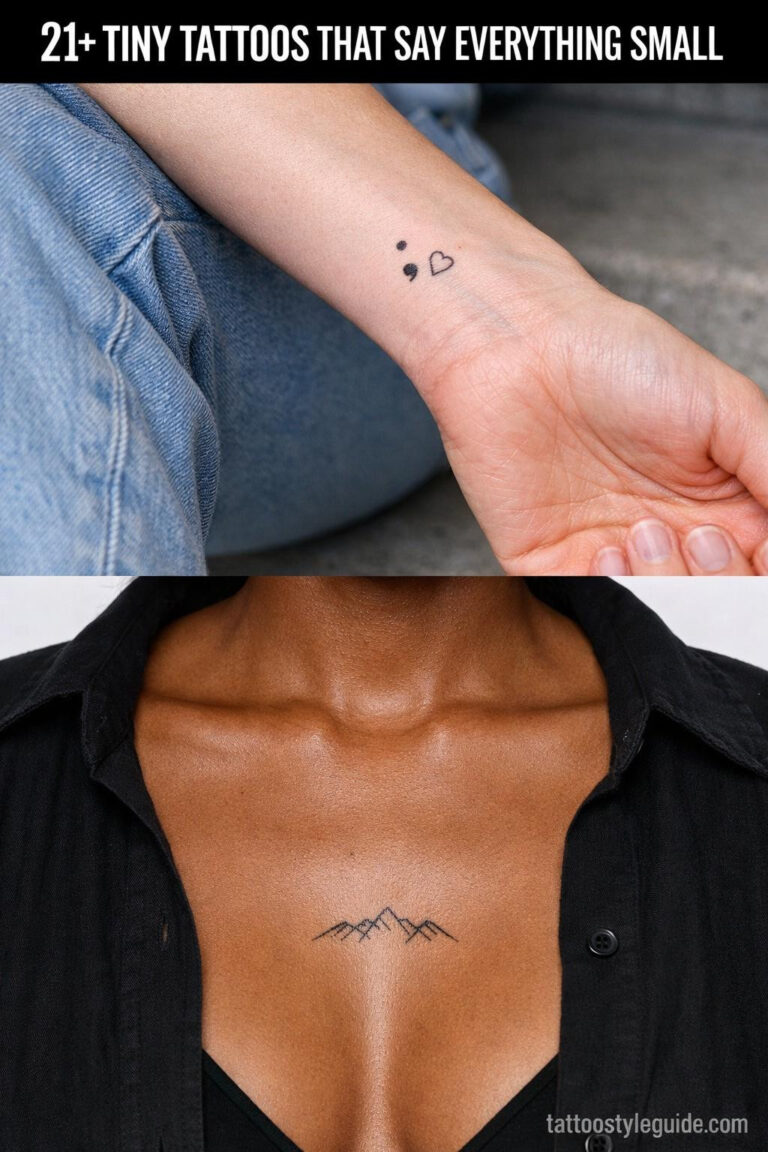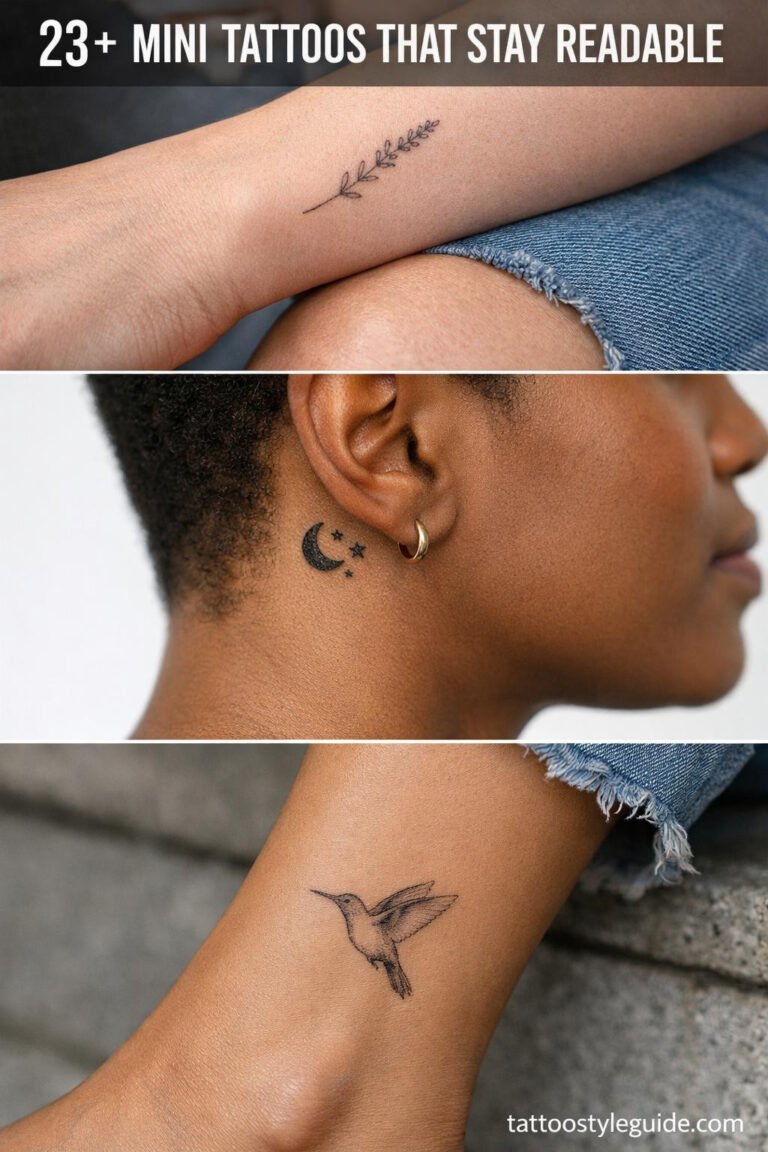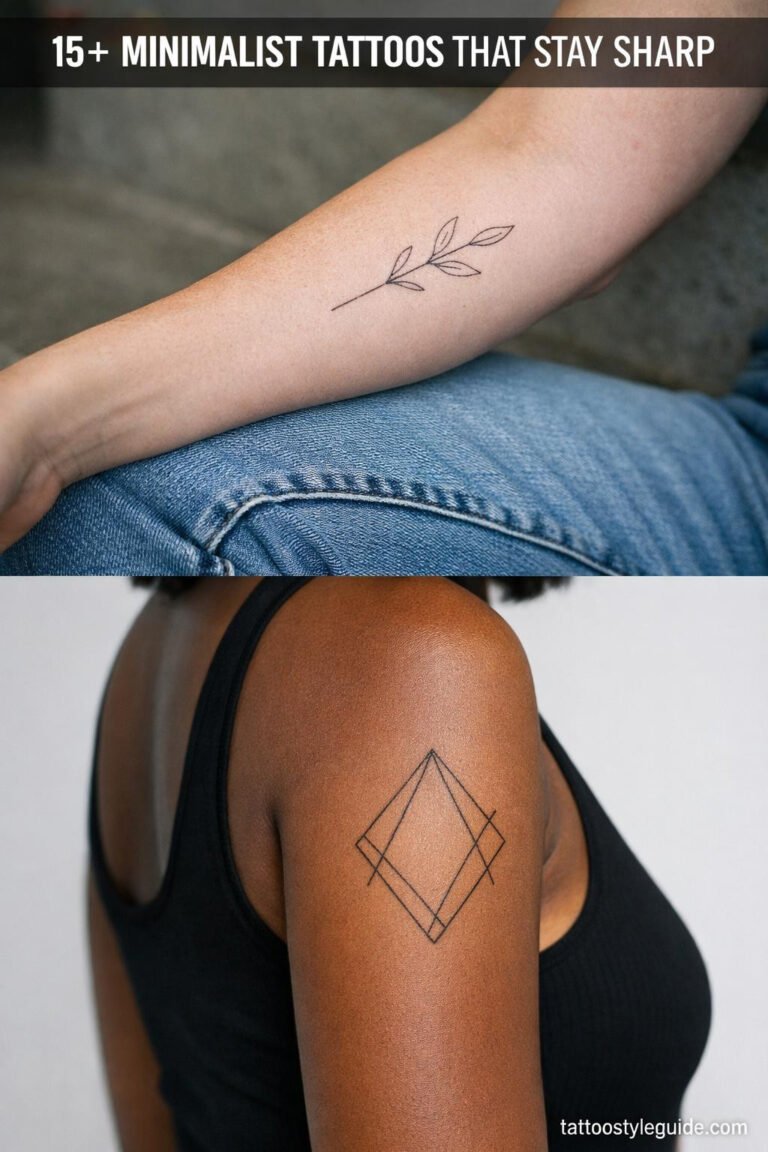
Simple tattoo ideas are not lazy. They are edited. The best ones remove every extra line until the tattoo is readable, personal, and easy to wear without a long explanation.
Quick answer: Good simple tattoo ideas include initials, dates, birth flowers, stars, moons, tiny animals, single words, small traditional motifs, abstract marks, and personal objects drawn with clean spacing.
Simple tattoo ideas with a clear reason
Simple tattoos work when the wearer knows why the mark exists and the artist keeps the shape readable.
| Idea | Best use | Watch-out |
|---|---|---|
| Initial | Family, partner, self | Use strong letter spacing |
| Birth flower | Month or family link | Simplify the stem |
| Small star | Direction or hope | Tiny points can soften |
| Personal object | Memory without text | Choose one recognizable detail |
| One-word script | Private phrase | Avoid long sentences |
The best simple tattoos have a clear reason behind them, and that reason doesn’t have to be deep. A single line drawing of your dog’s ear silhouette, the coordinates of a place you actually go back to, a birth flower that’s actually yours, not just pretty. When the design connects to something real, it stops being generic even if the style is minimal. That’s what separates a $60 flash tattoo that ages into regret from a $60 flash tattoo you’re still proud of ten years later.
Think about what you’d explain to a stranger without cringing. If the answer is nothing, keep thinking. A small tattoo on the inner forearm or collarbone reads clearly every day, so it better mean something to you. Placement matters here too. Low-wear zones like the upper arm or shoulder blade hold fine line work longer and give the design a better shot at staying crisp through the years.
Simple still needs structure
Simple does not mean generic, one specific detail changes everything.
A simple tattoo can fail if the artist treats it as easy. A single crooked line has nowhere to hide. A tiny date with poor spacing can blur faster than a larger design with more detail.
Before shrinking the design, ask whether the main shape will still be clear in five years. If the answer depends on perfect healing, make it bigger or simpler.
Simple doesn’t mean sloppy or rushed. A clean single-needle botanical still needs solid line weight, consistent spacing, and an artist who knows how deep to go without blowing out the lines. Blowout on a delicate piece looks catastrophic because there’s nothing else in the design to draw the eye away from it. Ask to see healed photos of your artist’s fine line work specifically, not just fresh shots straight off the needle.
Negative space and composition do the heavy lifting in minimal tattoos. A circle that’s slightly off, a stem that doesn’t balance the flower, a script letter that’s tighter on one side. these mistakes read louder on a simple piece than on a busy traditional tattoo. Your artist should be placing the stencil with intention and adjusting the size until it sits right on your body, not just slapping it down at whatever size the reference came in.
Questions for the artist
Simple tattoos are good first tattoos when the planning is honest.
- Ask for the minimum readable size.
- Ask whether the placement fades faster than average.
- Ask to see healed small tattoos, not only fresh ones.
- Ask what detail they would remove first.
Before you book, ask your artist how small is too small for the style you want. Fine line has a floor. Below a certain size, details collapse as the piece heals, usually within two years. Ask what needle configuration they use for delicate work and whether they whip shade or pack solid for any grey areas. These aren’t trick questions. A confident artist answers fast and explains why.
Ask about placement honestly. The inner wrist and fingers are high-wear zones and fine line fades fast there. The ribcage is spicy but heals well and holds detail. Behind the ear looks cool but needs frequent touch-ups. You want an artist who steers you toward a placement that serves the longevity of the piece, not just one that photographs well. Touch-ups on simple tattoos are usually quick and cheap, but you’d rather not need one in year one.
Simple tattoo traps
Do not confuse simple with meaningless. If the tattoo is just a random trend shape, it may age emotionally before it ages physically.
Do not put every simple idea on fingers. Fingers are tempting because they look cool in close-up photos, but they are high-friction skin.
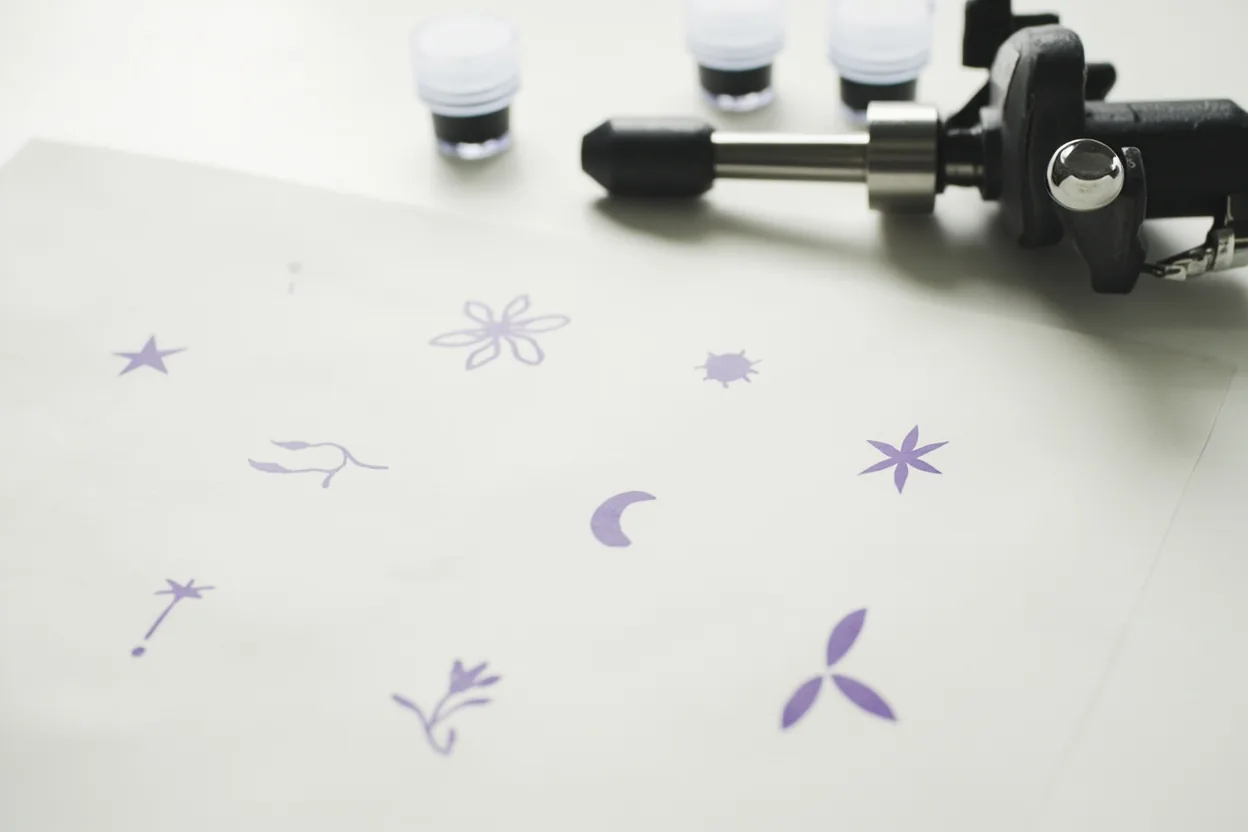
The biggest trap is going too small on something that needs room to breathe. A realistic moth at one inch across will heal into a dark smudge. A font that looks clean on your phone screen will blob out on skin because skin isn’t paper. Ask your artist to draw the design at actual size on paper before the stencil goes on. If it looks crowded or the lines are closer than two millimeters, size up or simplify.
Second trap is copying a reference exactly without adapting it for your body. That geometric forearm piece on a 130-pound influencer will proportion completely differently on a wider arm. A good artist will resize and redraw, not just print and press. Third trap is skimping on aftercare because it’s small. A tiny tattoo needs the same two to three weeks of lotion and sun protection as a full sleeve panel. Peel it early or fry it in the sun and even the crispest lines go soft.