The tramp stamp has one of the most loaded reputations in tattooing. The name itself is a cultural artifact from the early 2000s, when lower back tattoos on women got slapped with a dismissive label by people who had no business judging anyone’s ink. The placement is real, the tattoos are real, and the meanings people attach to them are real too.
Here’s the honest breakdown. Lower back tattoos have existed long before the tabloid nickname, they age well in a low-wear zone, and the designs people choose carry actual symbolism. If you’re researching one for yourself or just curious about the history, this is the straight story.
What Tramp Stamp Actually Means as a Cultural Term
The phrase tramp stamp emerged as slang in the late 1990s and hit peak usage around 2000 to 2005, mostly in American pop culture and tabloid media. It was used to mock women who got lower back tattoos, implying they were sexually promiscuous or low-class. That read was never accurate. It was straight-up sexism dressed up as humor. The tattoos themselves carried none of that meaning.
What the term really reflects is a moment when tattoos on women were still being policed by mainstream culture. Lower back placement was popular, visible above low-rise jeans, and that visibility got weaponized. Today most people in the tattoo community treat the nickname as dated. The placement itself is neutral, the stigma was always manufactured.
The Real Symbolism Behind Lower Back Tattoos
The only opinion about your lower back that matters is yours.
Lower back tattoos are most commonly read as symbols of femininity, sensuality, and personal power. The placement sits at the sacral region of the spine, which in many body-awareness traditions is associated with creative energy, sexuality, and intuition. People don’t always know that consciously, but the instinct to tattoo that spot tracks with what it represents biologically and energetically.
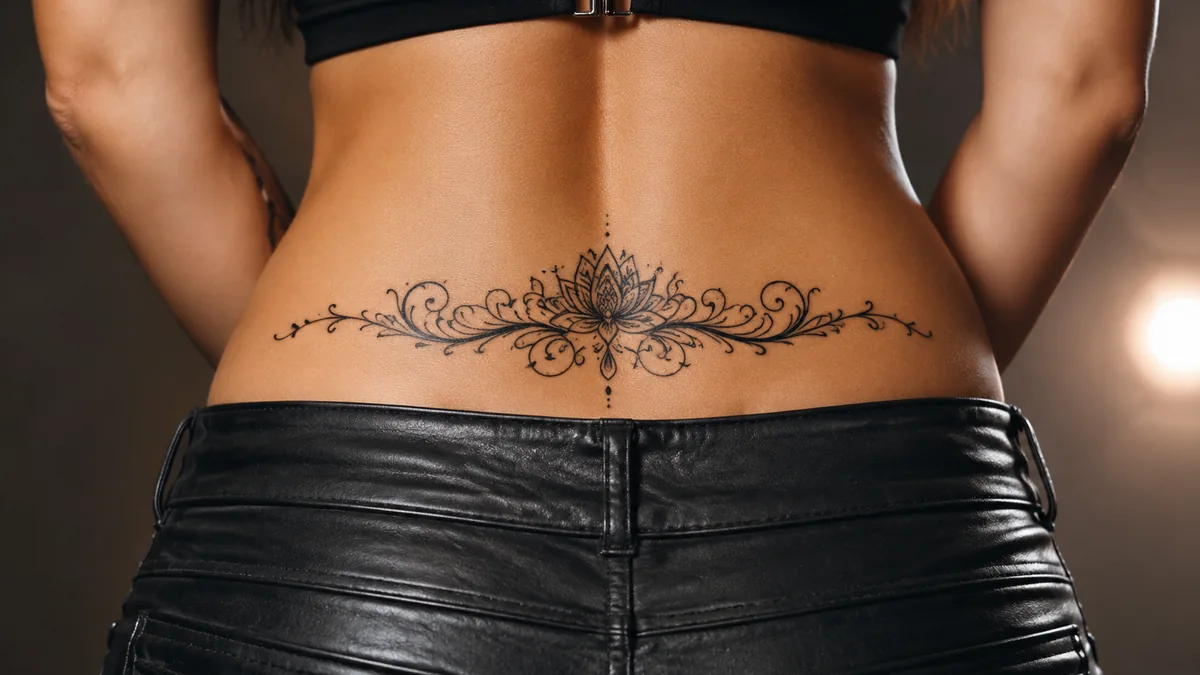
Beyond the anatomical symbolism, the designs people choose carry their own meanings. Tribal arches signal strength and heritage. Butterflies mean transformation. Lotus flowers represent rising above difficulty. Roses carry love, beauty, and sometimes thorns-included complexity. The placement amplifies whatever the design means because it’s intimate, partially hidden, and revealed only on purpose.
Historical and Cultural Background of Lower Back Tattoos
Lower back tattooing has roots in multiple cultures. Polynesian tribal traditions included extensive back and lower back work for both men and women as marks of status, lineage, and spiritual protection. Japanese horimono designs frequently extended down the lower back as part of full back pieces. These weren’t statements about sexuality, they were statements about identity and belonging.
In Western tattooing, the lower back became a popular standalone placement in the 1990s as tattoos moved mainstream and low-rise fashion made the zone visible. Flash designs, tribal arches, and Celtic knotwork dominated early. The placement was practical too. It’s relatively flat, heals clean, and holds color well. The meaning was always personal, the cultural baggage was added later.
Popular Design Styles and What They Say
Tribal arches are still the most iconic lower back design. Black, symmetrical, spreading outward from the spine, they read bold from across the room and age well because the lines are thick and deliberate. Bold will hold is exactly right here. Neo-tribal work updates the classic with more organic flow and custom shapes, making it feel contemporary without losing the graphic punch.
Fine line florals have taken over in recent years. Delicate roses, peonies, or vine work in single-needle or fine line style look stunning fresh but need more care long-term. The lower back is a low-wear zone so it doesn’t get the friction abuse that hands or feet do, but fine lines still soften over time. Black and grey botanical work, with solid fills and clean whip shade on petals, holds the best balance between detail and longevity.
Color vs. Black and Grey on the Lower Back
Color tattoos on the lower back pop hard when fresh. Saturated reds, deep blues, and bright yellows in a symmetrical floral or mandala design look incredible. The skin there is relatively even in tone and doesn’t see heavy sun exposure if you’re dressed normally, so color holds reasonably well. That said, any color will fade faster than black ink, full stop.
Black and grey is the safer long-game choice. A well-executed black and grey piece with clean linework and solid shading ages gracefully on the lower back. The zone flexes with movement but not constantly, so blowout risk is low compared to joints. If you want crispy lines that still read sharp at ten years, go with an experienced artist and lean toward bold over fine.
Pain Level and What to Expect in the Chair
The lower back is moderate on the pain scale. The fleshy parts on either side of the spine sit around a five or six out of ten for most people. Over the spine itself, especially the lumbar vertebrae, it jumps up. Bone proximity means more vibration and sharper sensation. Some people find the center line genuinely spicy, others handle it fine. Individual pain tolerance varies more than placement does.
Long sessions on the lower back can get uncomfortable because of the position. You’ll be lying face down for hours, and lower back muscles can tighten up. A good artist will give you breaks, keep your breathing steady, and pace the session. Eat before you come in, stay hydrated, and don’t book a four-hour session as your first tattoo. Start with a manageable design and let your body tell you what it can handle.
How It Ages and What Holds Up
The lower back is one of the better aging zones on the body. It doesn’t see the constant sun exposure that shoulders and forearms do. It doesn’t stretch dramatically with weight fluctuation the way the stomach or upper thigh can. The skin is thick enough to hold ink well, and the relatively flat surface means your artist can work precisely without fighting topography.
Tribal and geometric designs with solid black fill age the best. Clean black ink in bold lines will still be readable at twenty years. Fine line work and watercolor styles will soften and blur faster, not disappear, but they’ll lose that fresh crispiness. Touch-ups every eight to ten years can revive most designs. Keep sunscreen on it if you’re at the beach and moisturize the healed skin. Basic care makes a real difference.
Who Gets Them and How to Make It Personal
Lower back tattoos are overwhelmingly chosen by women, though that’s shifting. The placement reads as intimate and intentional, something that’s yours until you choose to show it. People who get them tend to be drawn to the balance of visibility and privacy. It’s not on your wrist where everyone sees it at the coffee shop. It’s on your terms.
Making it personal means going beyond flash. Work with your artist on a custom design that fits your actual story. Your heritage, a plant or animal that holds meaning, a phrase in a language you actually speak, a geometric form that feels right to you. The lower back is a wide, horizontal canvas that suits symmetrical designs naturally, but asymmetric work lands there too. Own the placement. The nickname has no power over a piece that actually means something to you.