Chinese tattoo ideas age well when you stop chasing tiny, overworked detail. I almost talked myself into a miniature calligraphy piece years ago, and I’m glad I waited.
Once I saw how line weight, placement, and translation change everything, the choice got easier. You want ink that stays clear on skin, not a symbol that turns to soup.
- Chinese Dragon Forearm Tattoo
- Fine Line Chinese Character Wrist Tattoo
- Blackwork Foo Dog Chest Tattoo
- Let the Phoenix Wingspan Breathe
- Red Ink Chinese Calligraphy Rib Tattoo
- Traditional Chinese Tiger Thigh Tattoo
- Chinese Koi Fish Half Sleeve Tattoo
- Single Needle Zodiac Animal Tattoo
- Why Does a Shoulder Guardian Lion Work So Well?
- Brushstroke Chinese Art Spine Tattoo
- Chinese Lotus And Crane Calf Tattoo
- Tiny Finger Symbol vs Real Longevity
- Shaolin-Scale Storytelling for a Full Sleeve
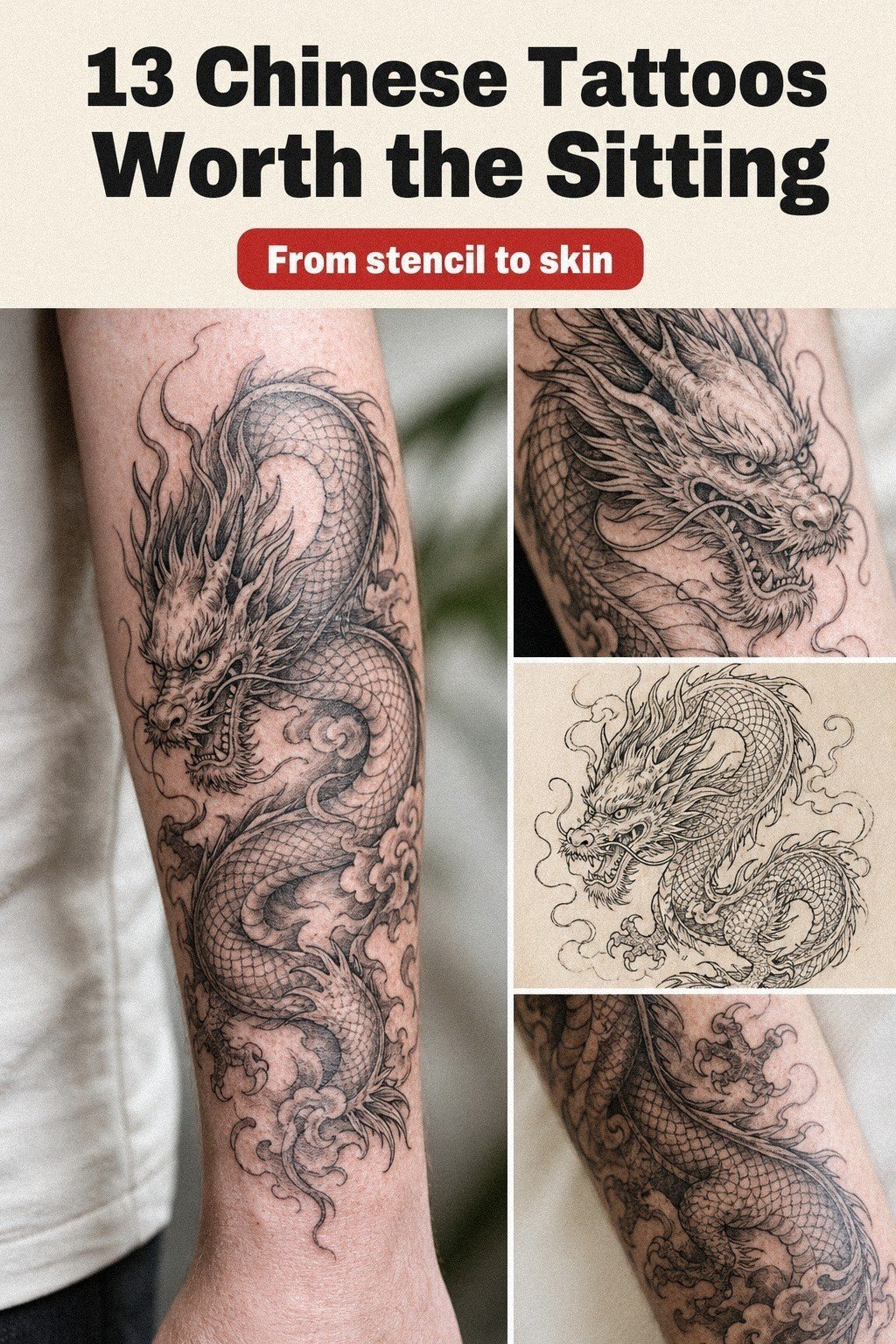
1Chinese Dragon Forearm Tattoo
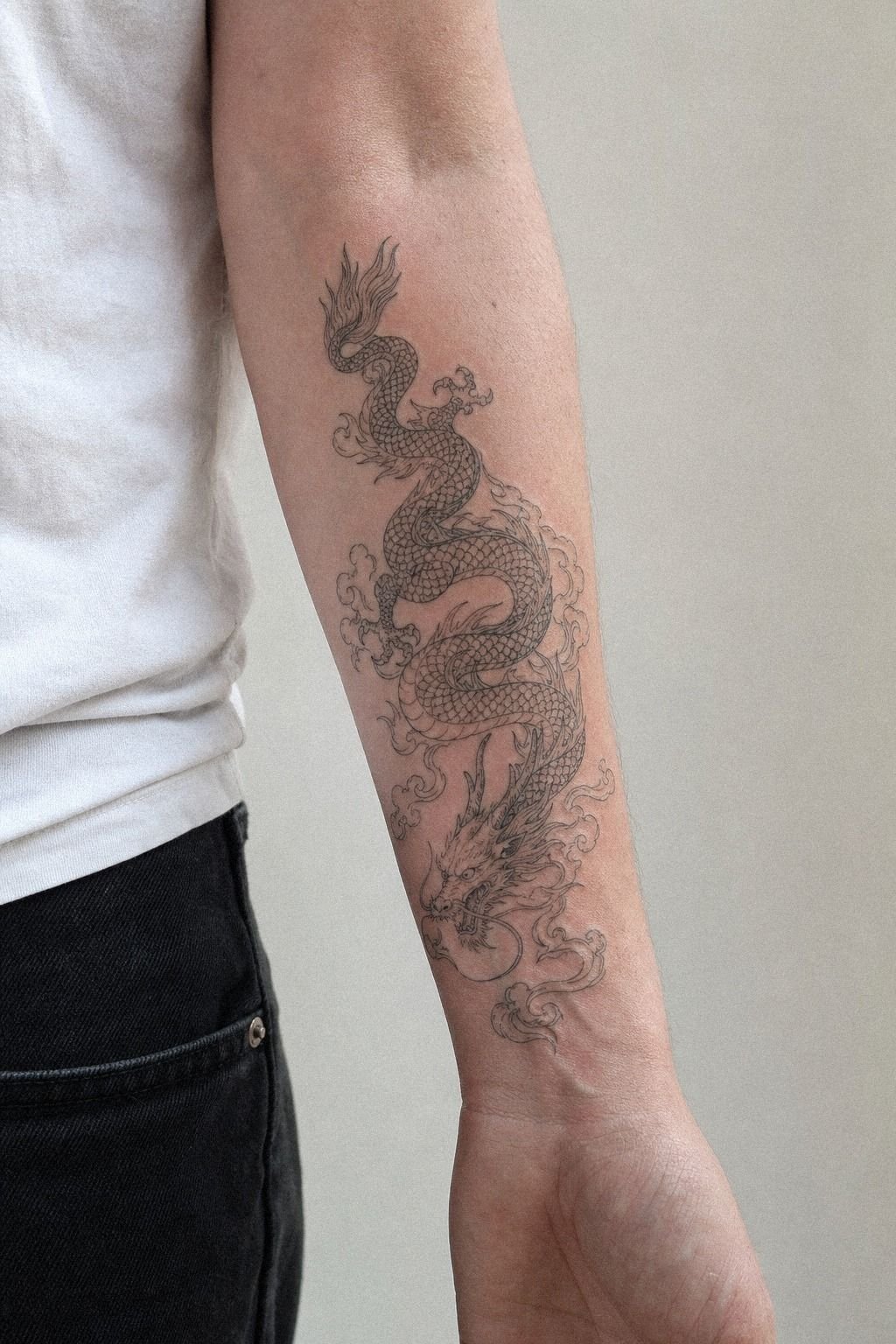
[IMAGE: Healed Chinese dragon forearm tattoo with sweeping whiskers, open skin, and black-and-grey flow wrapping from wrist toward elbow.]
A forearm dragon works because the body already gives you motion. If you run that shape from wrist toward elbow, dragon line flow follows the tendons and keeps the head readable when you twist your arm. You get movement without stuffing the design full of noise.
I tell clients to leave open skin around the claws and whiskers. On a fair cool-pink forearm like the one in the photo, fine line black ink looks crisp fast, but only if your artist makes one clean pull instead of stacking fuzzy passes. That clean pull is the whole game.
And forearm skin is usually pretty chill, so this is a smart first big piece if you want something symbolic without rib-level pain. If you care about story before style, read this dragon meaning breakdown before you book. You want power and movement, not random Pinterest copying.
2Fine Line Chinese Character Wrist Tattoo
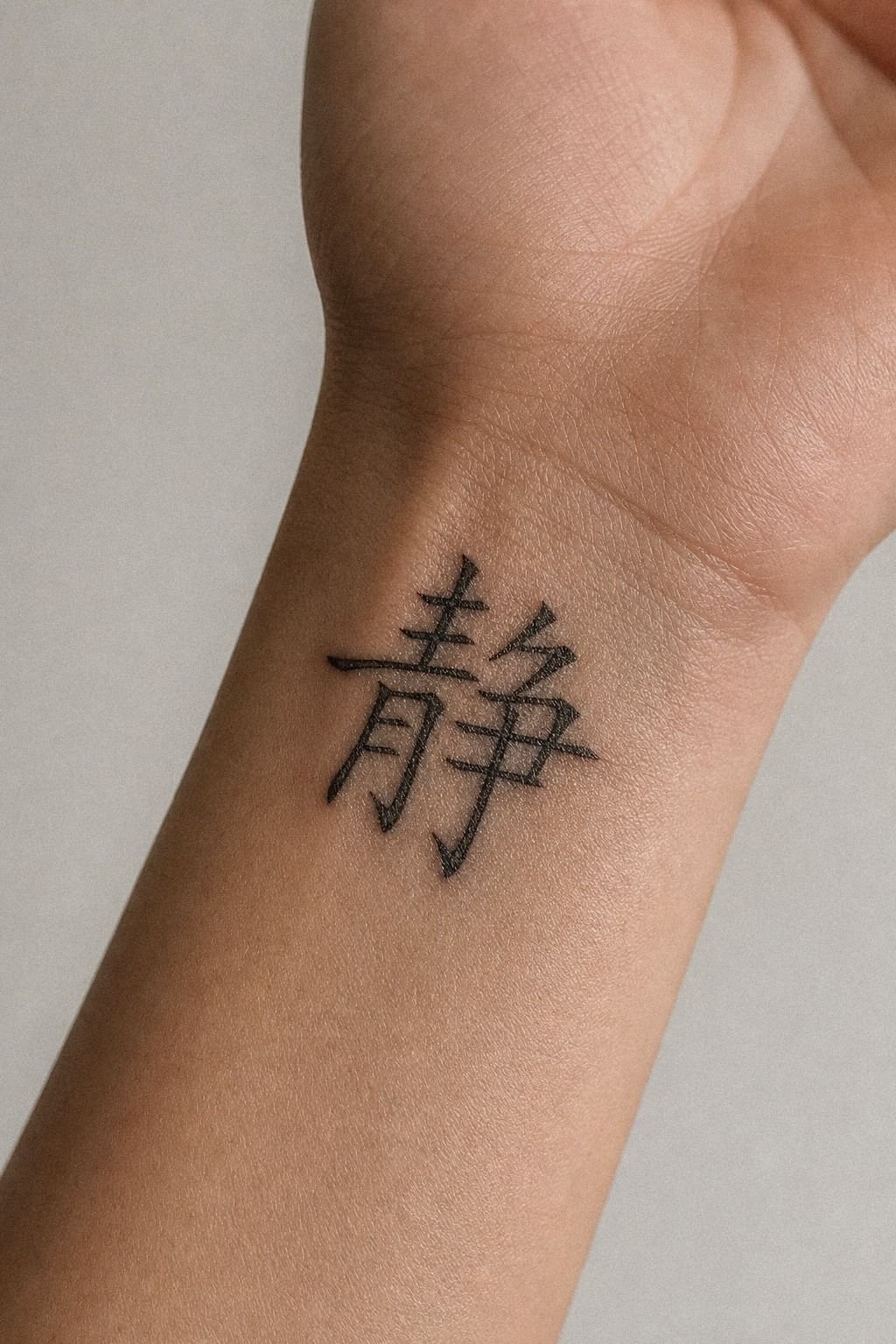
[IMAGE: Tiny but readable Chinese character wrist tattoo placed above the bend line with generous stroke spacing and clean black ink.]
A wrist character can be beautiful, but you need restraint. Keep single needle calligraphy short, bold in shape, and large enough that each stroke stays separate after a few years. If you cram too many marks into one inch, your clean symbol won’t stay clean.
Wrist tattoos show all day, so translation matters more here than almost anywhere else. I always tell people to verify the character with a native reader, then verify it again. But I also make them test the stencil while the hand bends, because a straight symbol can warp hard on a curved wrist.
This zone is higher wear than people expect. Wrist placement deals with watchbands, sleeves, sun, and daily friction nonstop, so your upkeep plan should be real from day one. You may love the minimal look, but you should plan for touch-ups and go read these Chinese writing tattoo meanings before you settle on a word you only half understand.
3Blackwork Foo Dog Chest Tattoo
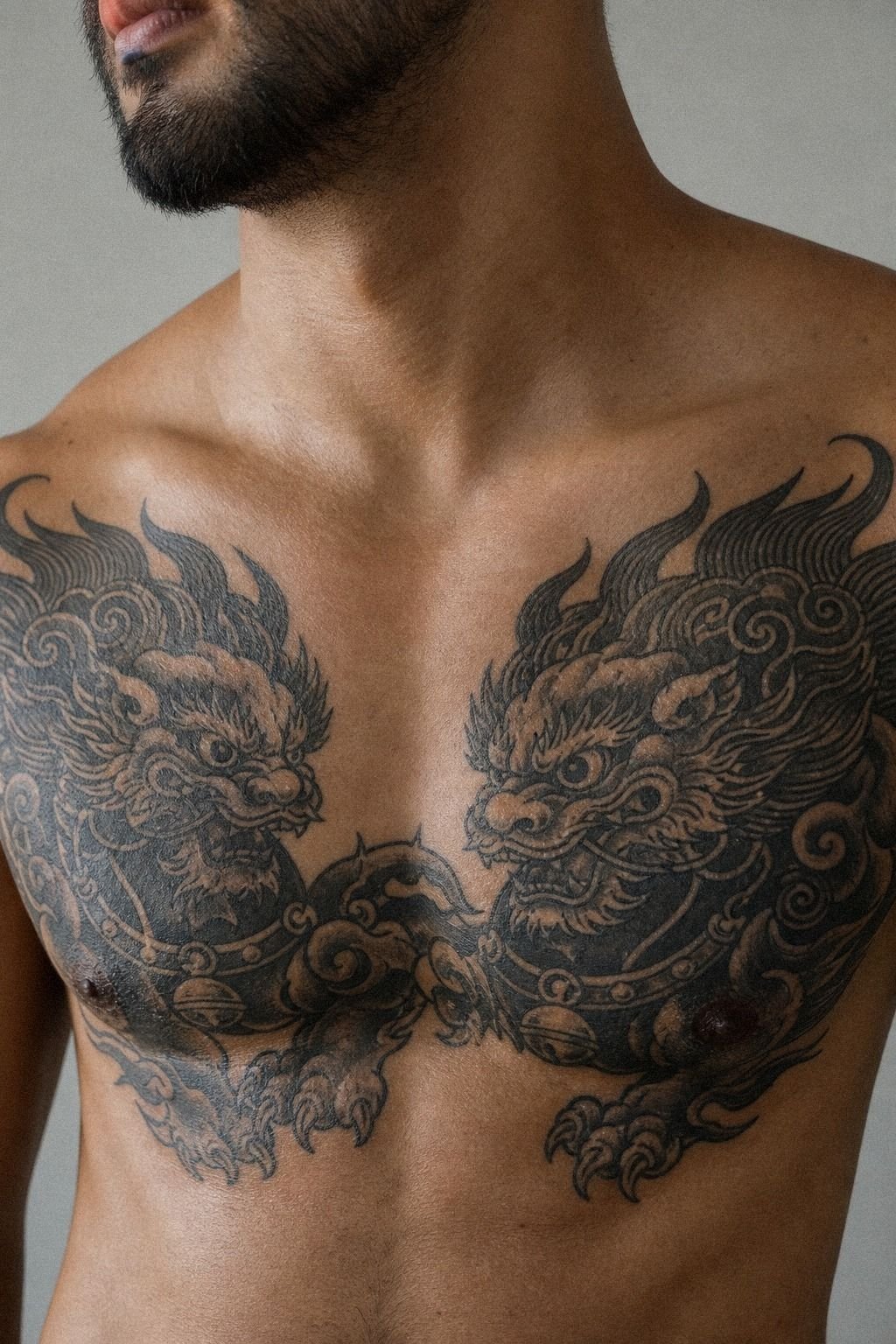
[IMAGE: Bold foo dog chest tattoo in saturated blackwork with clear eyes, negative skin breaks, and heavy contrast over the pec.]
A chest foo dog needs authority, not clutter. That’s why solid blackwork fill wins here. The chest gives you a wide field for the mane, teeth, and paws, and the black anchors the design so it still reads when your skin softens with time.
I wouldn’t do this piece too small. You want enough width for the eyes and curls to stay separate, especially on healed olive skin where a packed black shape looks rich and velvety. If your artist skimps on contrast, the center turns muddy and the face loses that guardian stare.
Chest work is moderate to spicy depending on how close you push toward sternum or collarbone. Foo dog symbolism also gives strong long-term payoff because the placement feels ceremonial and the size is worth the session time when you want a protector image that still reads hard ten years later. If you want the symbolism right, this Chinese lion meaning guide helps you sort guardian energy from generic tough-guy imagery.
4Let the Phoenix Wingspan Breathe
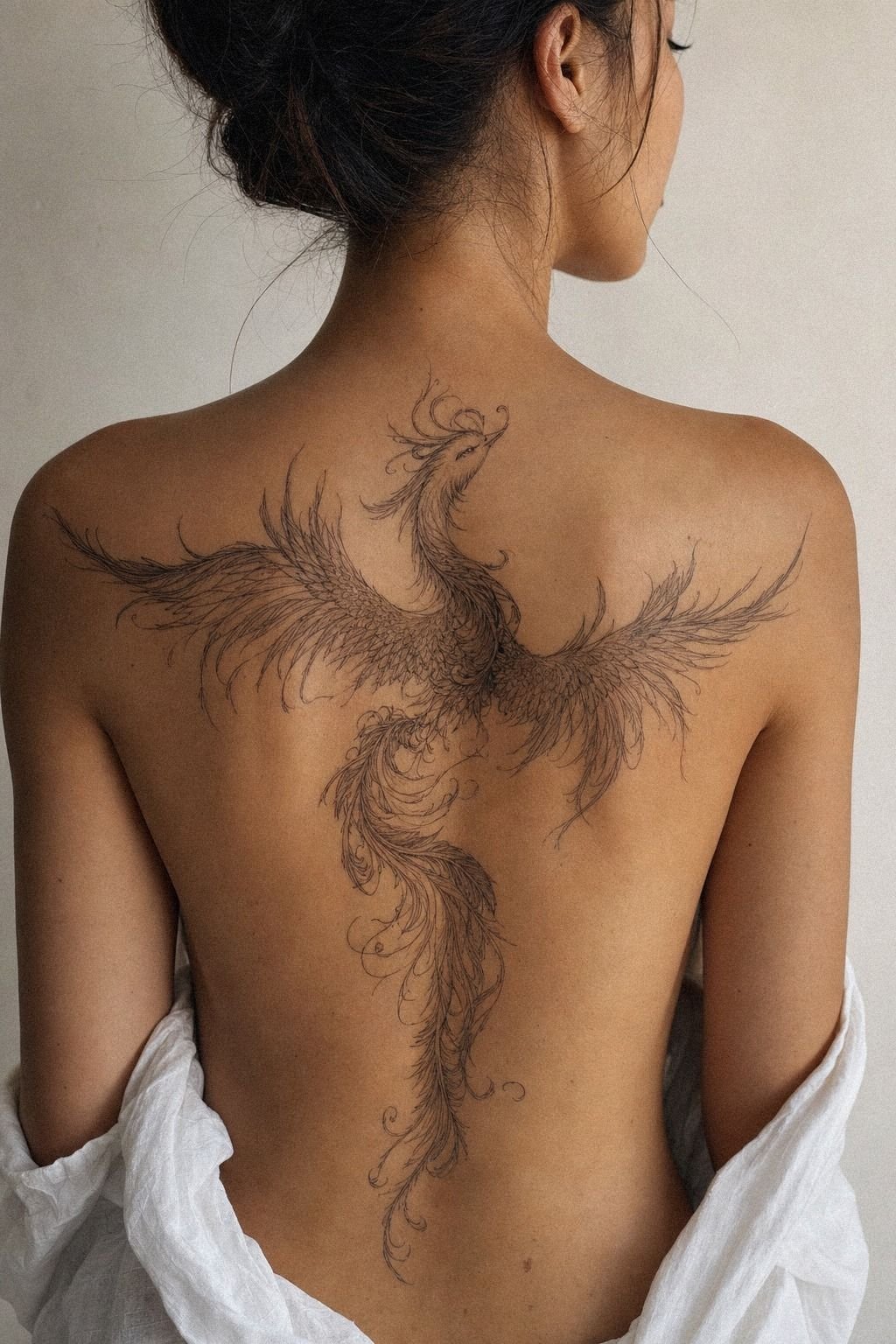
[IMAGE: Large Chinese phoenix back tattoo with extended wings, soft feather breaks, and centered tail flow across the upper back.]
A phoenix across the upper back gives you length, symmetry, and a clean landing zone for the wings. Upper back placement is low-wear, broad, and forgiving, which means the tail can stay elegant while the wing tips still have enough clearance to heal nice.
I like this design best when the body of the bird stays darker than the outer feather work. Grey wash feathers can look soft and expensive in the best way, but they need a darker spine through the center or the whole piece heals flat. That contrast is what keeps a phoenix looking fierce instead of flimsy.
Back work isn’t cheap, and it shouldn’t be. Phoenix composition takes planning, stencil edits, and enough scale to make the rebirth symbolism feel intentional, so the cost is usually worth it only when you’re ready to go bigger than a postcard. Small phoenixes lose drama fast.
5Red Ink Chinese Calligraphy Rib Tattoo
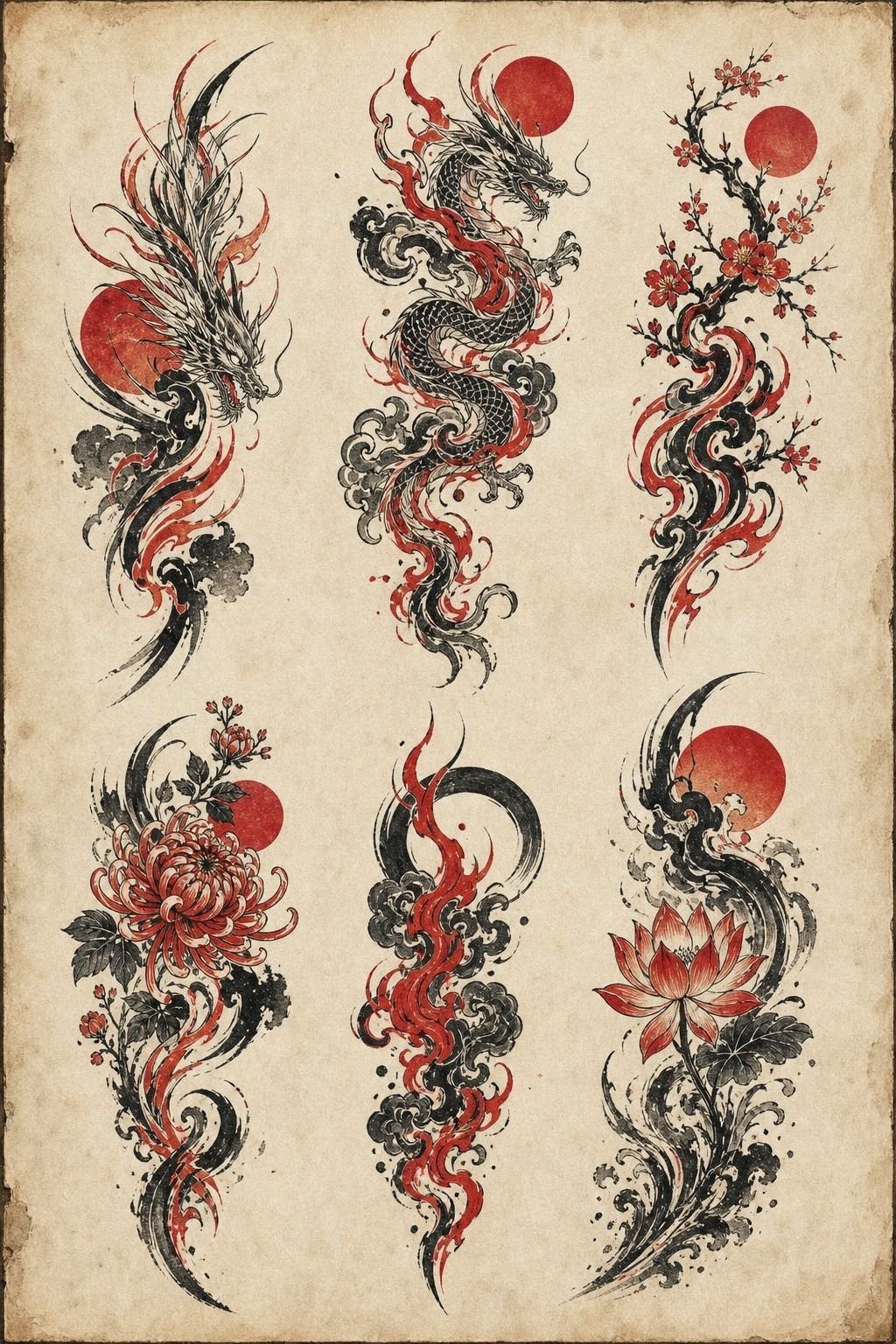
[IMAGE: Vertical red ink calligraphy rib tattoo with brush-style linework, open spacing, and a clean stencil running with the rib cage.]
Red ink calligraphy on the ribs looks gorgeous in flash form because the brush feel stays light and alive. I only like it when red pigment linework is simple enough to breathe, though.
Ribs already bring drama. The design doesn’t need extra chaos.
This placement is spicy. Lines feel sharper here, and color packing is the part most clients curse at. If you choose a calligraphy phrase, keep it long and vertical only when your artist can prove they understand brush rhythm, not just keyboard fonts pretending to be hand-drawn characters.
Flash sheets are useful because you can compare several stroke balances before committing. Brush rhythm is what makes this idea worth it, not the novelty of red ink by itself, so read this Chinese words tattoo meaning guide before you lock in a phrase. You need language that holds emotional weight, not just pretty red marks.
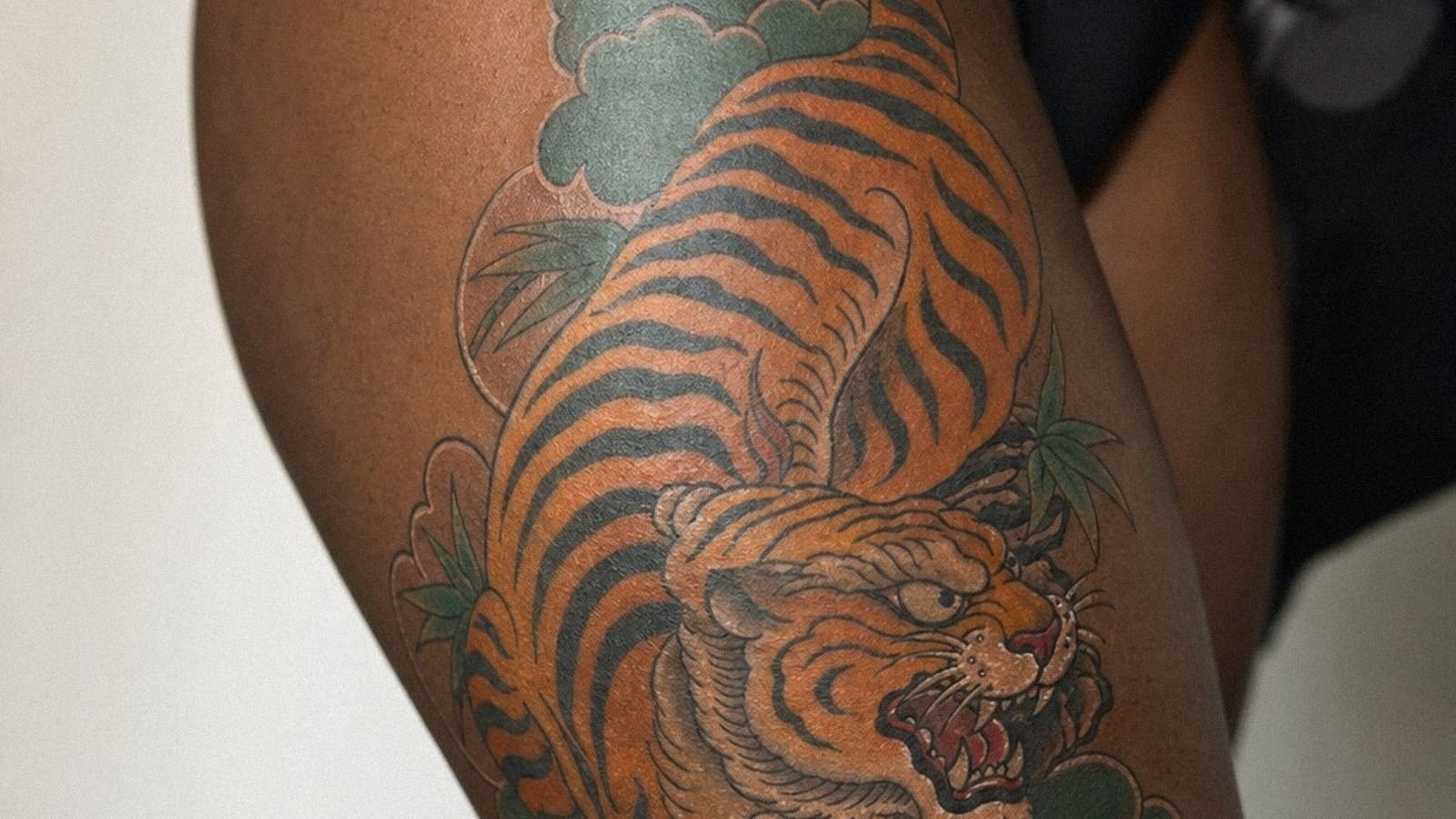
6Traditional Chinese Tiger Thigh Tattoo
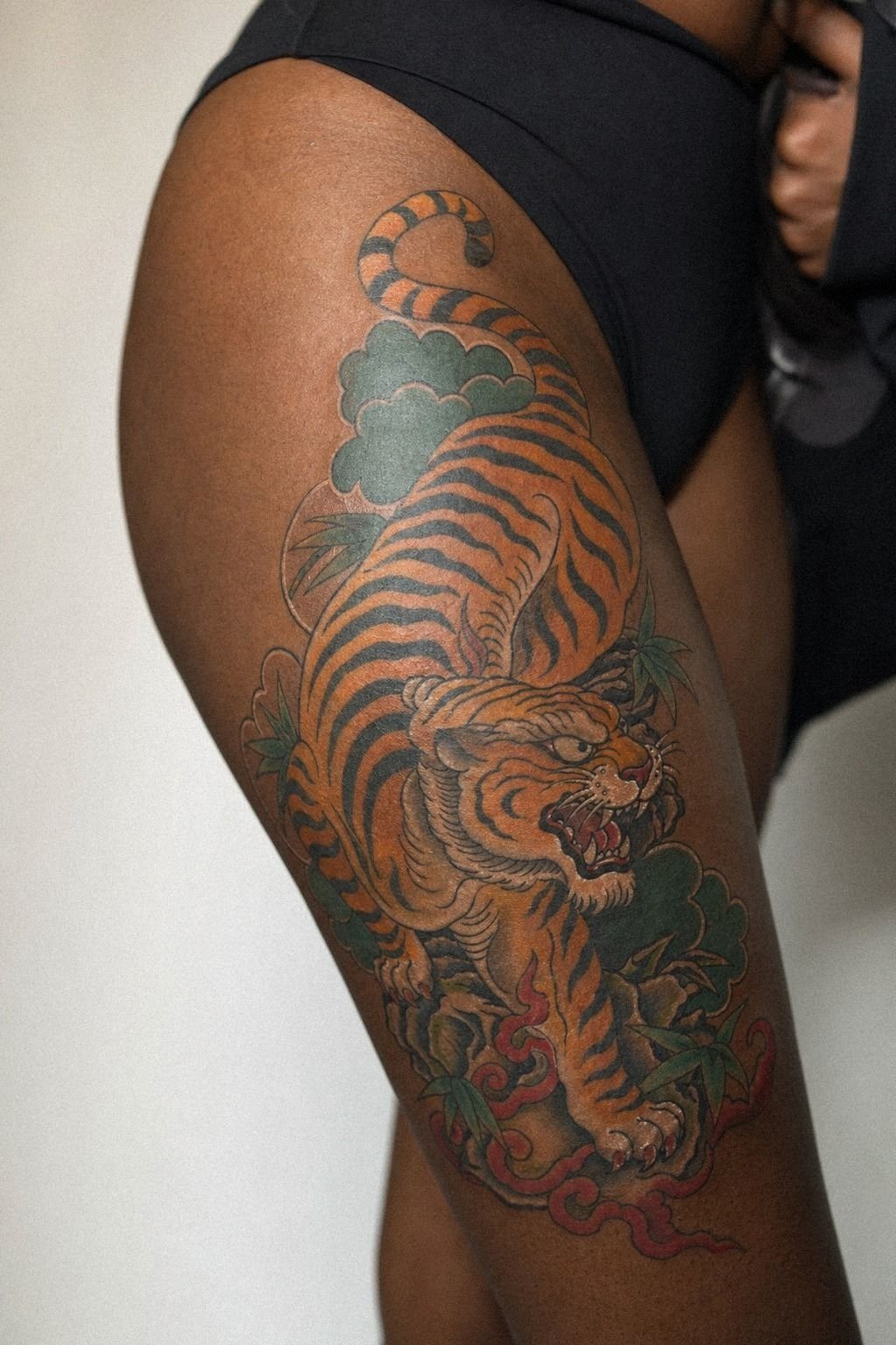
[IMAGE: Saturated Chinese tiger thigh tattoo with bold black outline, orange-gold fill, and simplified stripes built to age clean.]
A thigh tiger gives you muscle, motion, and enough width for a real face. On deep ebony skin, American traditional color packing can look insanely strong when the black outline is confident and the fill is saturated in one solid pass. Bold will hold here.
I love this placement for a tiger because the thigh is low-wear and forgiving. You can go bigger, simplify the stripes, and keep the eyes readable from a few feet away. But skip overly tiny whiskers.
That’s the stuff that gets chewed up first.
And pain is usually more chill here than people fear, which makes the thigh a good call if you want serious impact without tapping out early. Tiger symbolism lands hard too, because courage and force are easy to read when the face is built clean. If you’re comparing mythic animal energy, this Chinese tattoo meaning page can help you decide whether your tiger should read as courage, protection, or straight-up force.
7Chinese Koi Fish Half Sleeve Tattoo
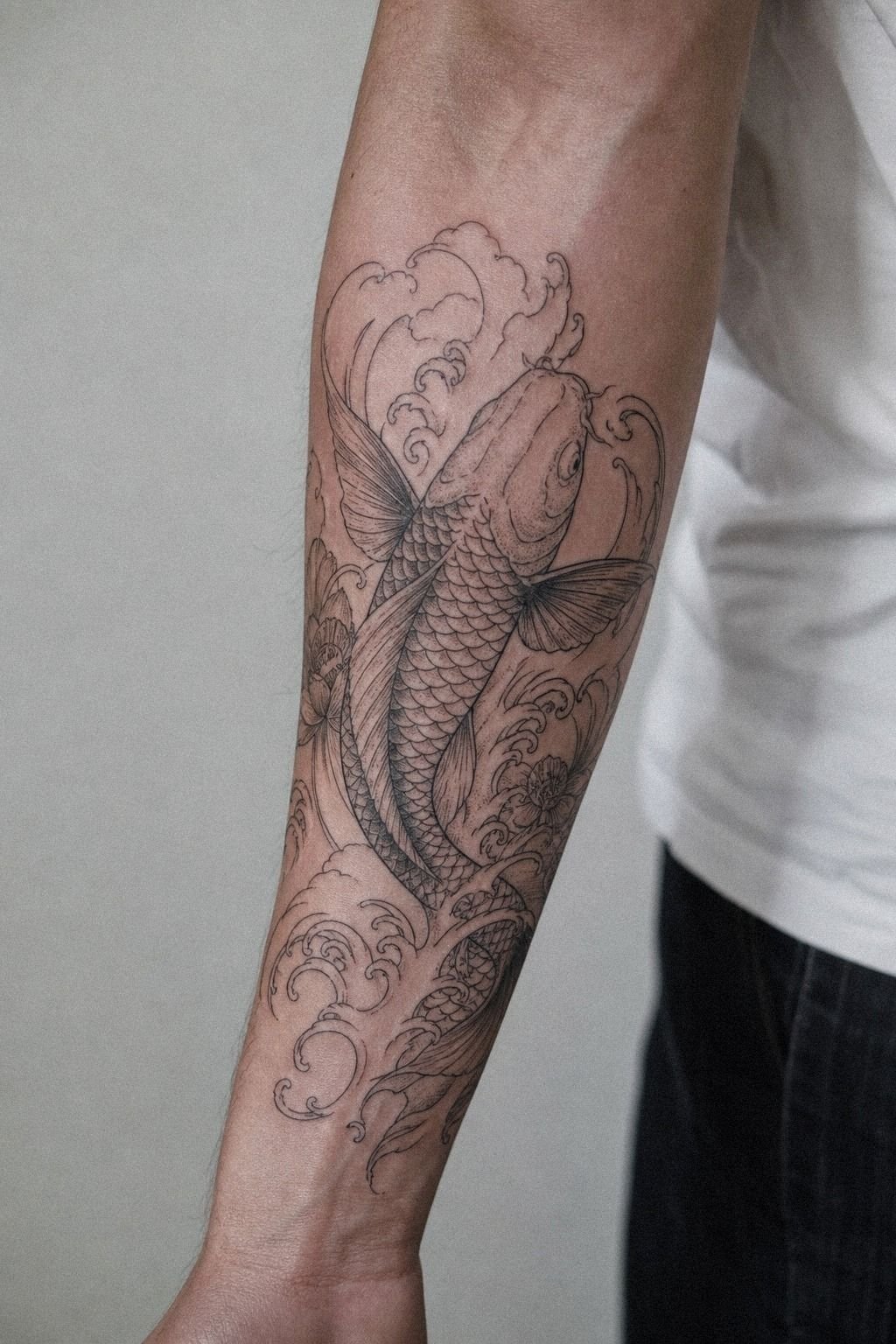
[IMAGE: Flowing Chinese koi half sleeve tattoo with black fins, layered waves, and a readable head-to-tail wrap around the forearm.]
Koi do best when the body can travel. On a forearm half sleeve, koi current composition lets the fish bend with the arm so the head, fins, and tail unfold in sequence instead of stacking into one busy patch. That’s why this placement feels alive.
I prefer a koi with enough black in the fins and scales to keep the shape stable over time. Fine line can work, sure, but only if the artist knows where to thicken key edges. Otherwise the fish loses structure and the water details take over for no reason.
This is a piece where you should think in sessions, not impulse. Half sleeve planning affects your price, your wrap tests, and the final payoff you get from the whole arm, because a rushed koi can look busy while a mapped koi looks custom. If you’re sorting symbols, this broader Chinese tattoo meaning guide is worth a read before you commit.
8Single Needle Zodiac Animal Tattoo
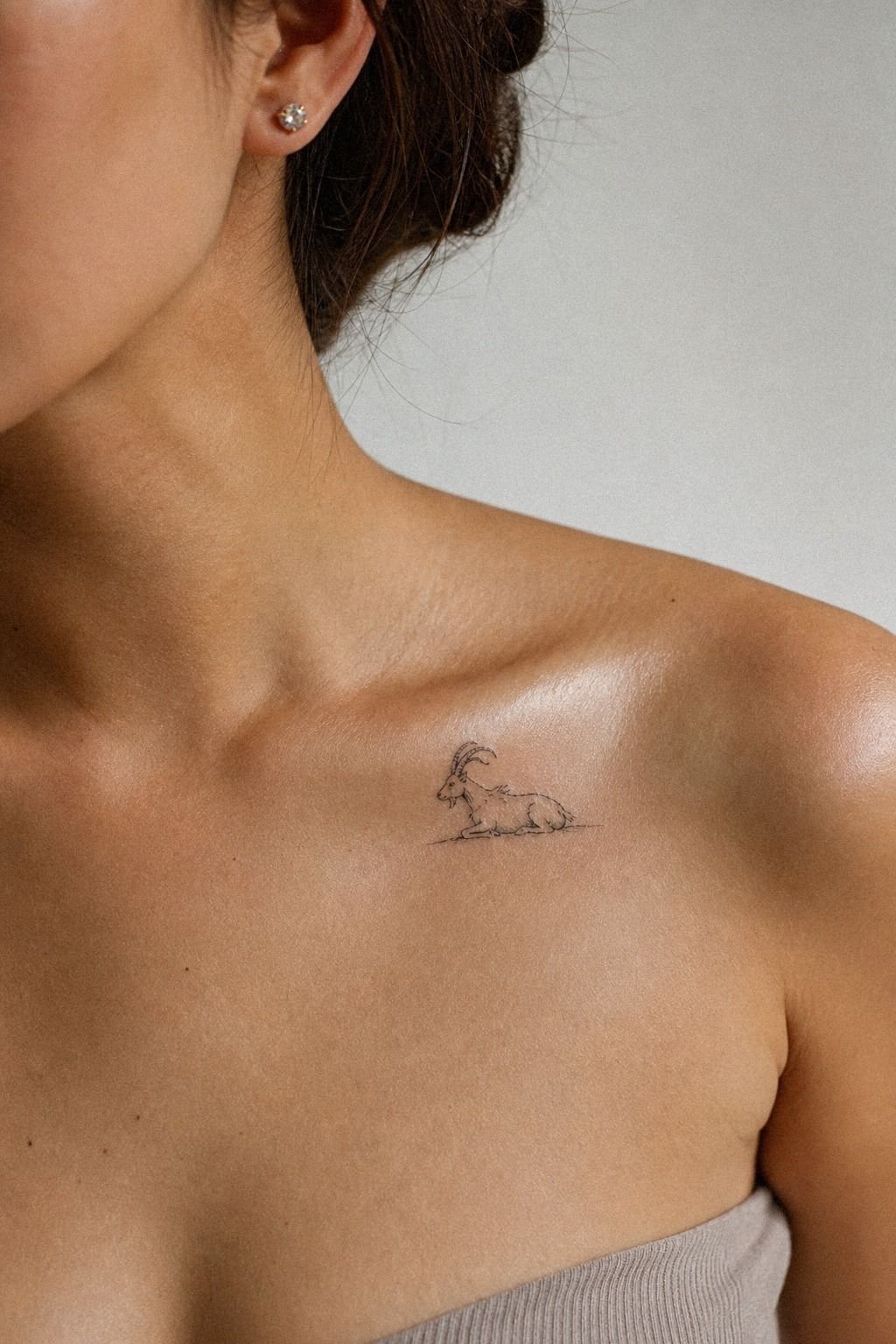
[IMAGE: Delicate Chinese zodiac animal tattoo near the collarbone with soft single-needle detail and a strong silhouette.]
A zodiac animal near the collarbone can look soft, intimate, and very intentional. With single needle anatomy detail, you can keep a rabbit, snake, goat, or rooster delicate without making it flimsy. The move is choosing a silhouette that still holds when the skin relaxes.
Collarbone tattoos have a clean editorial look, but they aren’t the easiest first placement. Bone makes every line feel sharper, and tiny over-detailed fur or feathers can blur faster than you think. I usually pull clients back from miniature realism here and push them toward simpler shapes.
If the zodiac idea is personal, that’s the right reason to do it. But collarbone placement still needs a serious artist, because the prettiest concept falls apart if the stencil fit is off or the line endings get scratchy. And if you’re torn between symbol and script, this Chinese writing tattoo meanings guide gives you a better starting point than random reposts.
Your meaning should land before the needle ever does. That part matters!
9Why Does a Shoulder Guardian Lion Work So Well?
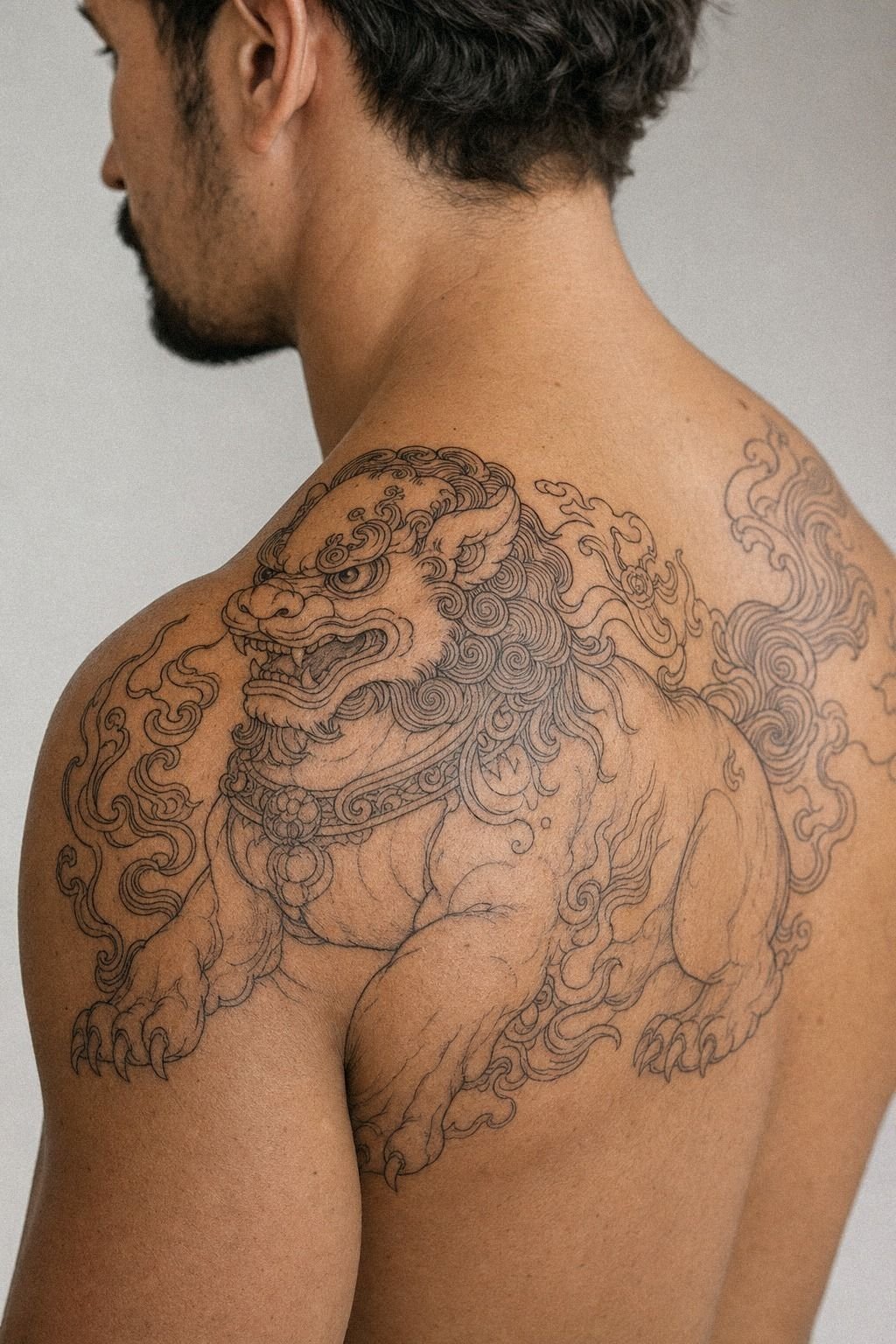
[IMAGE: Powerful guardian lion shoulder tattoo wrapping over the deltoid with centered face placement and bold mane texture.]
A shoulder guardian lion works when the head wraps the round of the deltoid instead of sitting flat on top. Shoulder anatomy flow gives the brow, nose, and jaw a natural curve, which makes the face feel alive instead of stickered on.
I like a shoulder lion when the mane gets broken into clear dark masses instead of tiny fuzzy hair marks. Black-and-grey contrast does a lot of heavy lifting here, especially on medium skin, because the rounded placement can swallow weak detail if the shadows aren’t pushed enough.
This is also a smart medium-size project if you want ceremonial energy without full-sleeve commitment. Guardian lion design gives you strong symbolism, decent visibility, and a price tag that stays more manageable than chest or back work. That’s a pretty solid middle ground.
10Brushstroke Chinese Art Spine Tattoo
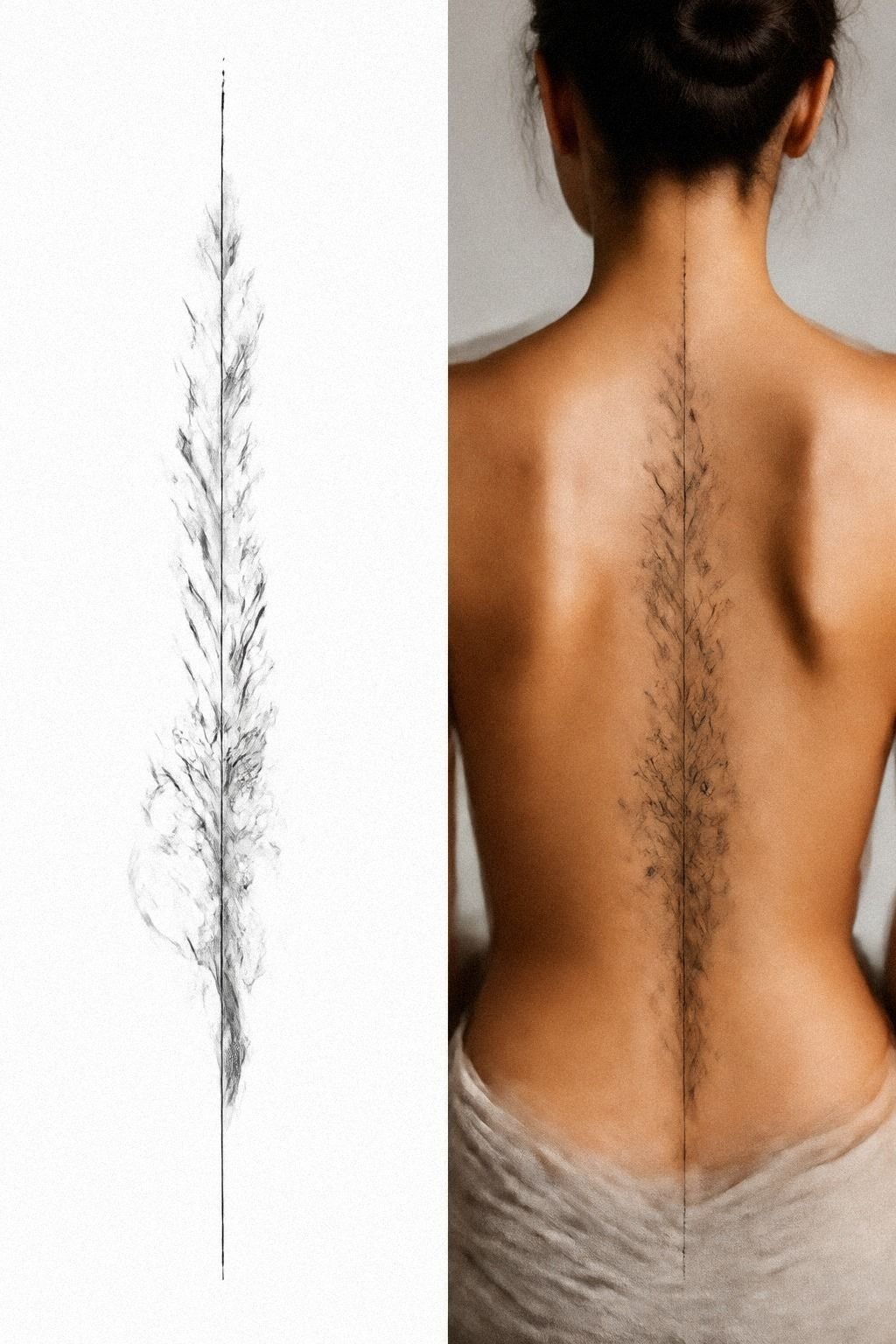
[IMAGE: Vertical brushstroke spine tattoo with stencil marks aligned to the spine and a dark anchor line keeping the painted effect readable.]
A brushstroke spine piece lives or dies on translation from paper to body. In the split image, the stencil side matters because brush-to-skin planning shows whether the ink rhythm still works once the design meets vertebrae, shoulder blades, and your natural posture.
Spine tattoos can look insanely elegant, but they demand discipline. Every wobble shows.
Every crowding mistake shows. And if the painted effect is too soft without a black anchor, the healed version can flatten out faster than clients expect.
But this is also one of the clearest examples of why stencil approval matters. Spine calligraphy is worth it only when the artist maps every break before the first line, so read this Chinese tattoo meaning guide if you need the concept to feel as strong as the look.
This placement is spicy, especially near the lower spine and upper bone points. Stencil alignment is the whole point here, and I wouldn’t let anyone freehand calligraphy onto your back without a clean standing test first!
11Chinese Lotus And Crane Calf Tattoo
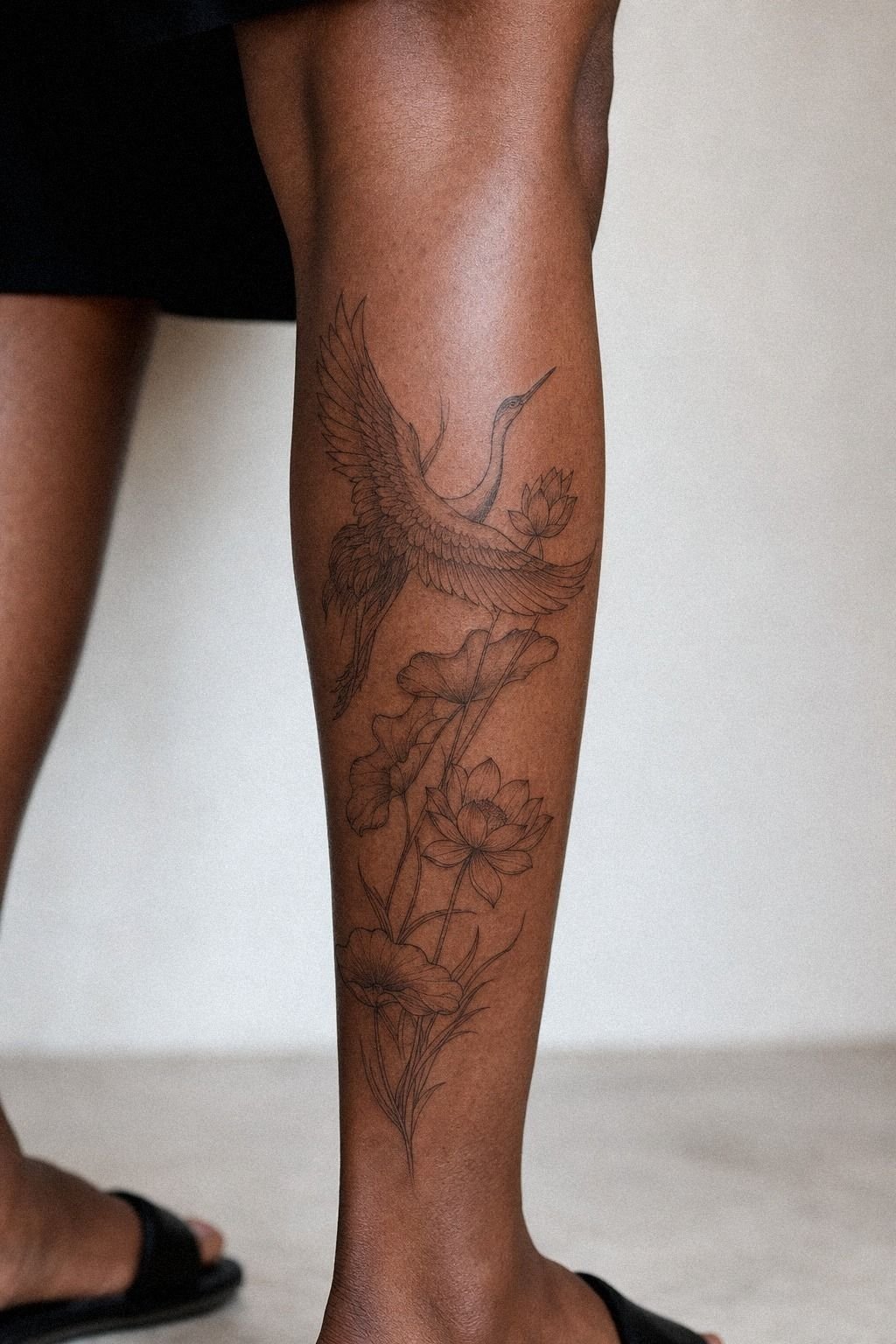
[IMAGE: Elegant lotus and crane calf tattoo with vertical balance, dark wing structure, and open petals against the calf.]
The calf is underrated for story pieces. A lotus and crane composition can sit beautifully there because calf vertical balance gives you a natural top and bottom, with the bird leading the eye and the flower grounding the design near the lower leg.
On deep brown skin with warm undertone, I like strong black structure with lighter fine detail layered carefully on top. Layered black contrast gives you shape first and softness second. If you reverse that order, the tattoo may heal too quiet and lose the graceful crane silhouette.
Calf pain is usually manageable, and the placement ages well because it isn’t taking constant hand-level abuse. Crane symbolism also carries real emotional weight if you’re building a calm, harmony-heavy theme, so this yin yang meaning article helps before you book.
And if you want broader cultural framing too, symbol pairing matters more than cramming in extras, so this Chinese tattoo meaning page can stop you from forcing a dozen mixed ideas into one calm piece. Less noise, more clarity.
12Tiny Finger Symbol vs Real Longevity
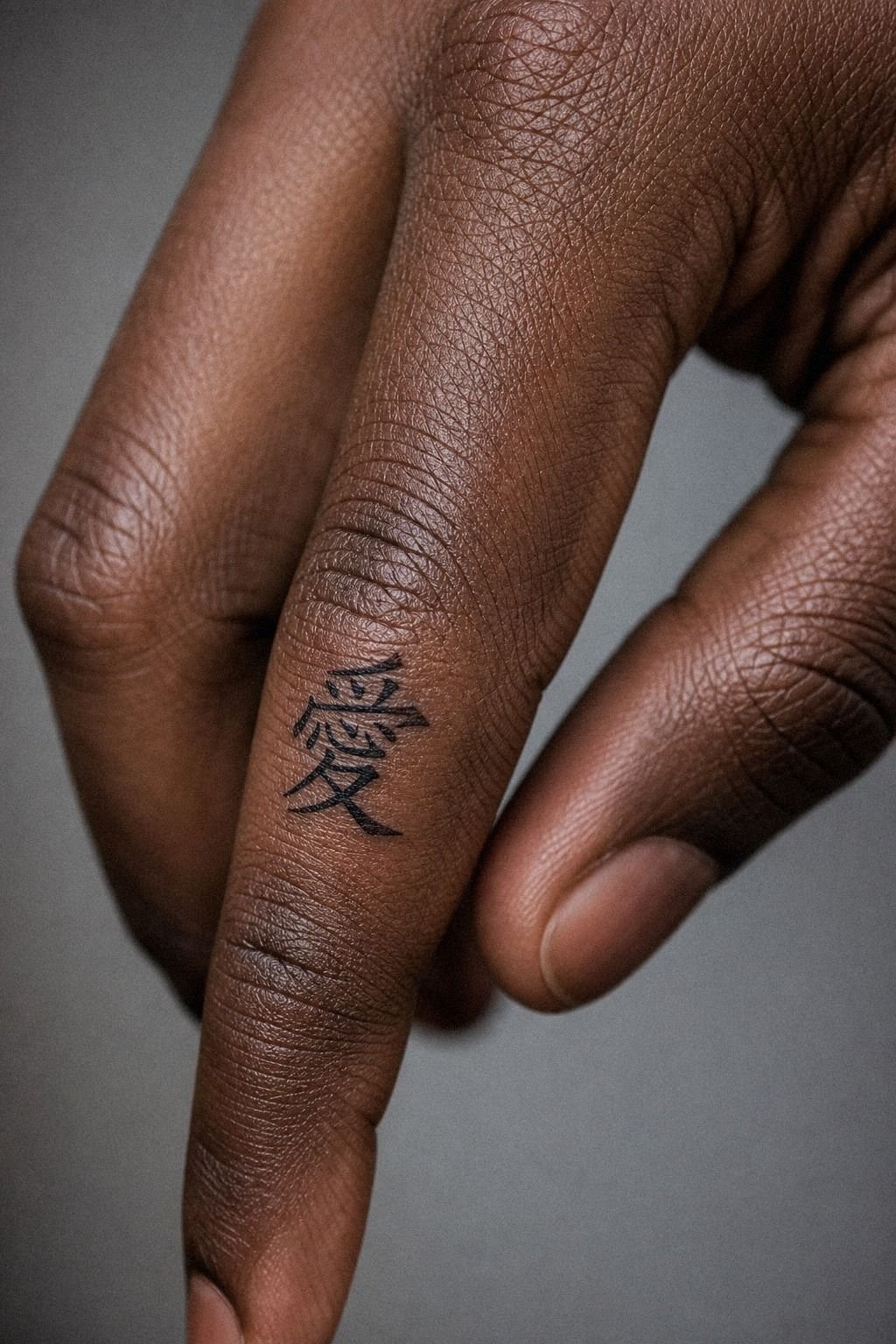
[IMAGE: Minimal Chinese symbol finger tattoo placed high on the side of the finger with thick enough strokes to survive wear.]
Finger symbols are cute until they fade weird. Finger tattoo wear is no joke, and this is one of those placements where the tiny look can rob you of clarity if the lines are too skinny.
I keep telling first-timers the same thing: hands are for people who accept touch-ups. High-wear skin deals with soap, friction, weather, and constant movement, so even a clean symbol can soften fast compared with forearm or calf work.
If money is tight, this isn’t the smartest pick. Finger placement often needs maintenance sooner, which means the low up-front price can turn into more touch-up money later than a slightly bigger tattoo on calmer skin.
13Shaolin-Scale Storytelling for a Full Sleeve
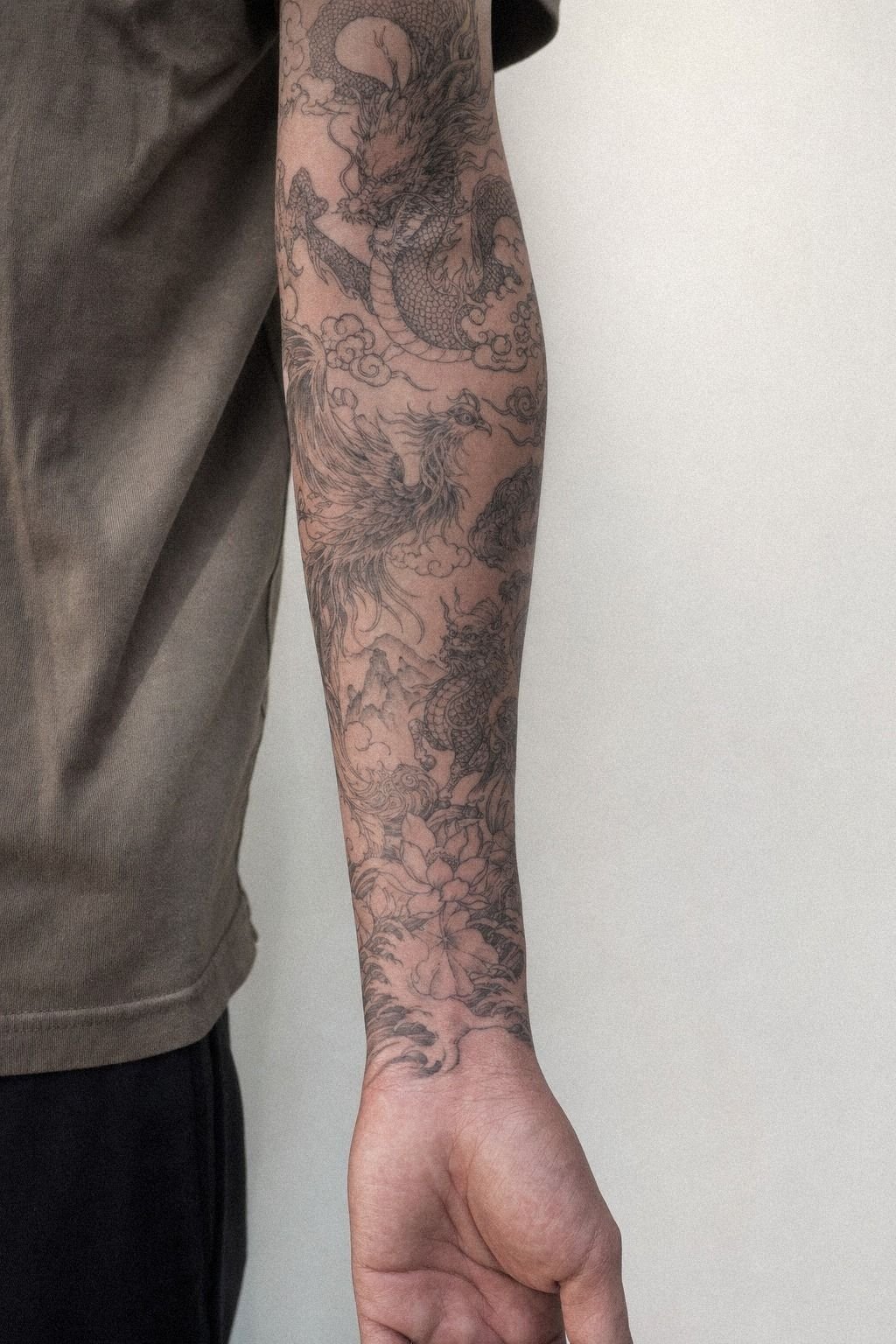
[IMAGE: Cohesive Chinese mythology sleeve tattoo with dragon, waves, guardian figure, and controlled grey wash from shoulder to wrist.]
A mythology sleeve needs hierarchy or it becomes visual soup. When I map one out, mythology sleeve hierarchy means one hero image, one support image, and enough quiet skin between them that your eye knows where to land first. You need order before detail.
Dragons, clouds, guardians, koi, calligraphy, and waves can all live together, but not at the same volume. Grey wash background should sit softer than the main figure, while the hero image stays darkest. Otherwise every inch shouts and none of it sticks.
And this is not a same-day whim. Sleeve planning is a multi-session commitment, often over months, and your artist should be steering the flow from shoulder to wrist from day one. If you want a meaning check before that commitment, this Chinese tattoo meaning guide is the bare minimum homework.
A sleeve also forces you to think about what each symbol is doing for the full story. Narrative tattoo flow matters as much as drawing skill, so if you can’t explain why the dragon, crane, or guardian belongs there, wait and tighten the brief. Your future self will thank you!
The Meaning-First Rule
[IMAGE: Mixed Chinese tattoo reference sheet showing dragon, calligraphy, crane, lotus, and shoulder guard placements with clear scale differences.]
The biggest mistake I see with Chinese tattoos isn’t style. It’s rushing the meaning because the visual looks cool.
I get it. A dragon, a crane, a sharp column of calligraphy, a brushstroke down the spine, all of that photographs well. But if the symbol is wrong, mirrored, awkwardly translated, or packed too tight for skin, you don’t have a timeless tattoo.
You have a temporary thrill.
I always tell clients to start with the clearest idea they can say out loud in one sentence. Protection. Discipline.
Renewal. Family.
Balance. That’s enough. From there, you and your artist can choose whether the cleanest vehicle is calligraphy reference, a mythic animal, or a larger narrative piece.
What you don’t want is a dozen references fighting each other because you couldn’t edit.
And here’s the part people resist: skin is not paper. A brushstroke that sings on a sheet can die on a finger.
A tiny character that looked elegant on your phone can widen just enough in three years that it stops reading the way you wanted. That’s not failure.
That’s physics. Black ink longevity is still your best friend, and simple shapes still beat micro-detail when you care about long-term clarity.
But meaning also gets clearer when placement supports it. A chest guardian feels ceremonial.
A forearm dragon feels active. A rib phrase feels intimate.
A shoulder lion feels protective. Why force the wrong body zone just because a cropped photo looked cool?
If you want Pinterest-exact, I’m not your artist. Bring references for vibe only, then let the design get built for your skin, your movement, and your tolerance.
Real talk: this is also where budget choices get honest. Tattoo value isn’t about finding the cheapest line on the quote sheet.
It’s about paying for translation checks, strong drawing, clean stencil fit, and enough scale that the symbol still reads in ten years. A small bad tattoo can cost less today and more tomorrow.
The pieces that usually age best are the ones with clear hierarchy and calm skin around them. Consult time matters.
Reference editing matters. And a larger design with better structure can beat a cheaper tiny symbol every single time when longevity is the goal.
The Questions I Get Asked Most
[IMAGE: Clean Chinese tattoo consultation setup with stencil printouts, placement sketches, and healed reference photos on the table.]
How much does a Chinese Tattoo usually cost?
A Chinese tattoo usually falls under shop minimum for tiny pieces or the normal hourly rate for larger work. Cost clarity matters more than bargain hunting because cheap, scratchy linework gets expensive later.
Are Chinese Tattoo a good idea for a first tattoo?
Yes, they can be, especially when you keep the design clear and the placement forgiving. First-tattoo friendly usually means forearm, thigh, or shoulder.
Clean linework. Simple shapes. One meaning you can explain without rambling.
How do I choose a tattoo artist for Chinese Tattoo?
Look for healed photos, not just fresh ones. Portfolio proof means crispy lines, readable black, and symbols that still make sense once the redness is gone. Ask about style fit, translation checks, and studio hygiene before you leave a deposit.
You can also compare portfolios against Chinese dragon tattoo meaning references or Chinese lion symbolism guides so your artist choice matches the subject you want.
How much do Chinese Tattoo hurt?
Pain depends on placement more than symbolism. Forearm, thigh, and shoulder are usually more tolerable.
Ribs, fingers, feet, sternum, and spine hit much harder. Lines feel sharp, shading burns dull, and color packing is often the spiciest part.
How long does a Chinese Tattoo take to heal?
Most Chinese tattoos settle on the surface in about 2 to 3 weeks, then keep remodeling underneath for 2 to 3 months. Clean healing comes from gentle unscented soap, a thin layer of aftercare, and zero picking when it peels like sunburn.
And yes, skip pools, hard gym friction, and direct sun early on. Aftercare discipline is where a clean tattoo stays sharp, and if you’re new to symbolic script, this Chinese words tattoo meaning guide is good prep before you even hit aftercare.
What’s the best placement for Chinese Tattoo?
For most people, forearm and upper arm are the safest bets. Low-wear placement helps the lines stay clear longer, and you still get easy visibility. If you love fingers or ribs, cool, just know you’re trading comfort or longevity for drama.
Where I’d Start First
[IMAGE: Clear forearm dragon tattoo placement showing readable head, strong outline, and open skin that keeps the symbol easy to read.]
If I had to pick one, I’d start with the Chinese Dragon Forearm Tattoo. Forearm flow gives you visibility, motion, and enough clean skin that the head and claws stay readable for years. Pin it for later and read the dragon meaning guide before you book.