Tattoo design book ideas matter if you want ink that still looks clean years from now. I almost rushed my first book-themed sketch, and the problem was not the drawing. It was size, placement, and how the lines would heal. If you pick with longevity in mind first, you will not get stuck with a clever idea that turns to soup later.
- Open Tattoo Design Book Forearm Tattoo
- Fine Line Tattoo Design Book Outline
- Bookish Tattoo Design Book With Tiny Symbols
- Why Does a Wrist Book Tattoo Need More Size?
- Traditional Flash Tattoo Design Book Page
- Botanical Tattoo Design Book On Inner Arm
- Blackwork Tattoo Design Book With Bold Lines
- Watercolor Tattoo Design Book, But Keep It Anchored
- Minimal Tattoo Design Book Behind The Arm
- What Matters More, Stencil or Healed Result?
- Single Needle Tattoo Design Book Rib Ink
- Moleskine-Inspired Tattoo Design Book Sleeve
- Red Ink Tattoo Design Book Linework Versus Black
- Healed Tattoo Design Book With Soft Shading
1Open Tattoo Design Book Forearm Tattoo
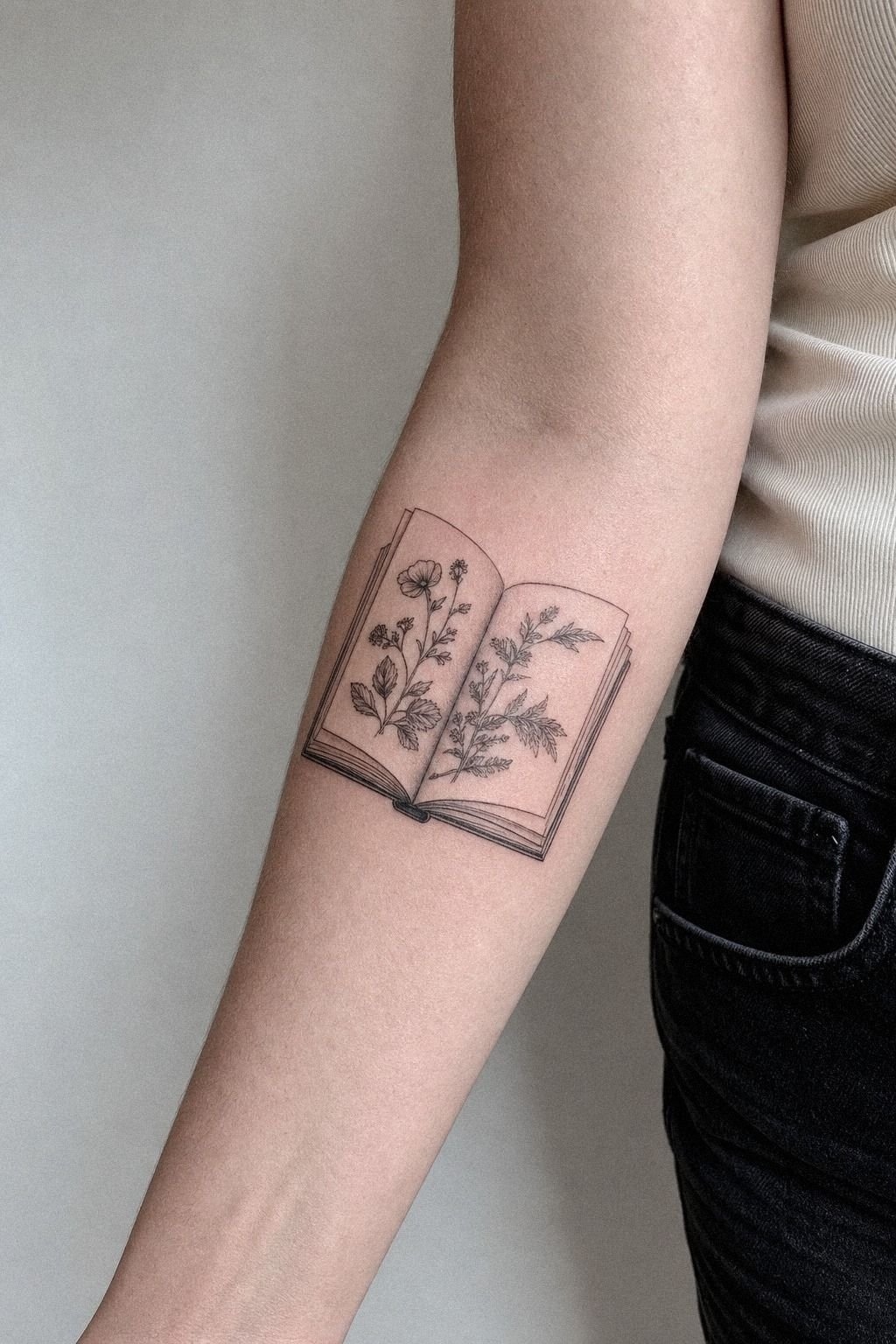
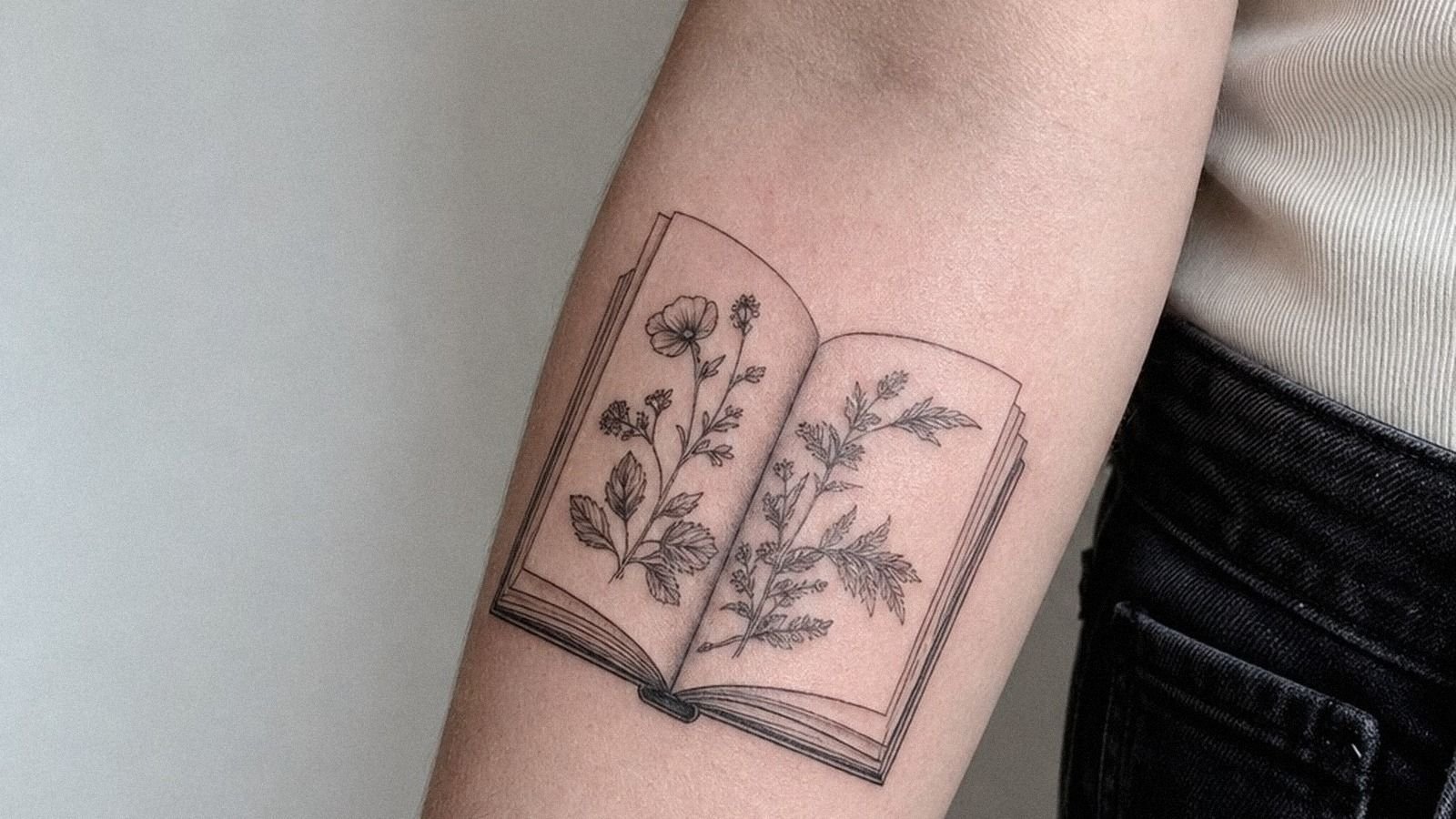
Start with an open book on the outer forearm if you want a first piece that feels readable without being loud. That placement gives the pages enough width to breathe, and you can let the spine run with the arm instead of fighting it. I like this area because you get low friction, steady skin, and a shape that heals nice.
On fair cool-pink skin, I keep the page edges airy and the lineweight just a touch thicker than people expect. Fine line black ink looks delicate here, but it still needs contrast if you want it to stay crisp after the first few summers. If you want more help sizing the sketch before you book, this guide on how to design your own tattoo is a solid place to start.
The win with this layout is movement. A book opened at a slight angle looks less stiff, and your arm won’t flatten the design into a block every time you turn your wrist. I tell clients to think in inches, not Pinterest vibes.
Three to four inches usually gives the pages enough clearance to age clean.
Skip micro text inside the pages. Single-needle lettering looks cute fresh, but page text that’s too tiny will blur into grey fuzz faster than the outline around it. Let the book shape do the talking, and keep one symbol, one flower, or one moon phase inside if you need extra meaning.
2Fine Line Tattoo Design Book Outline
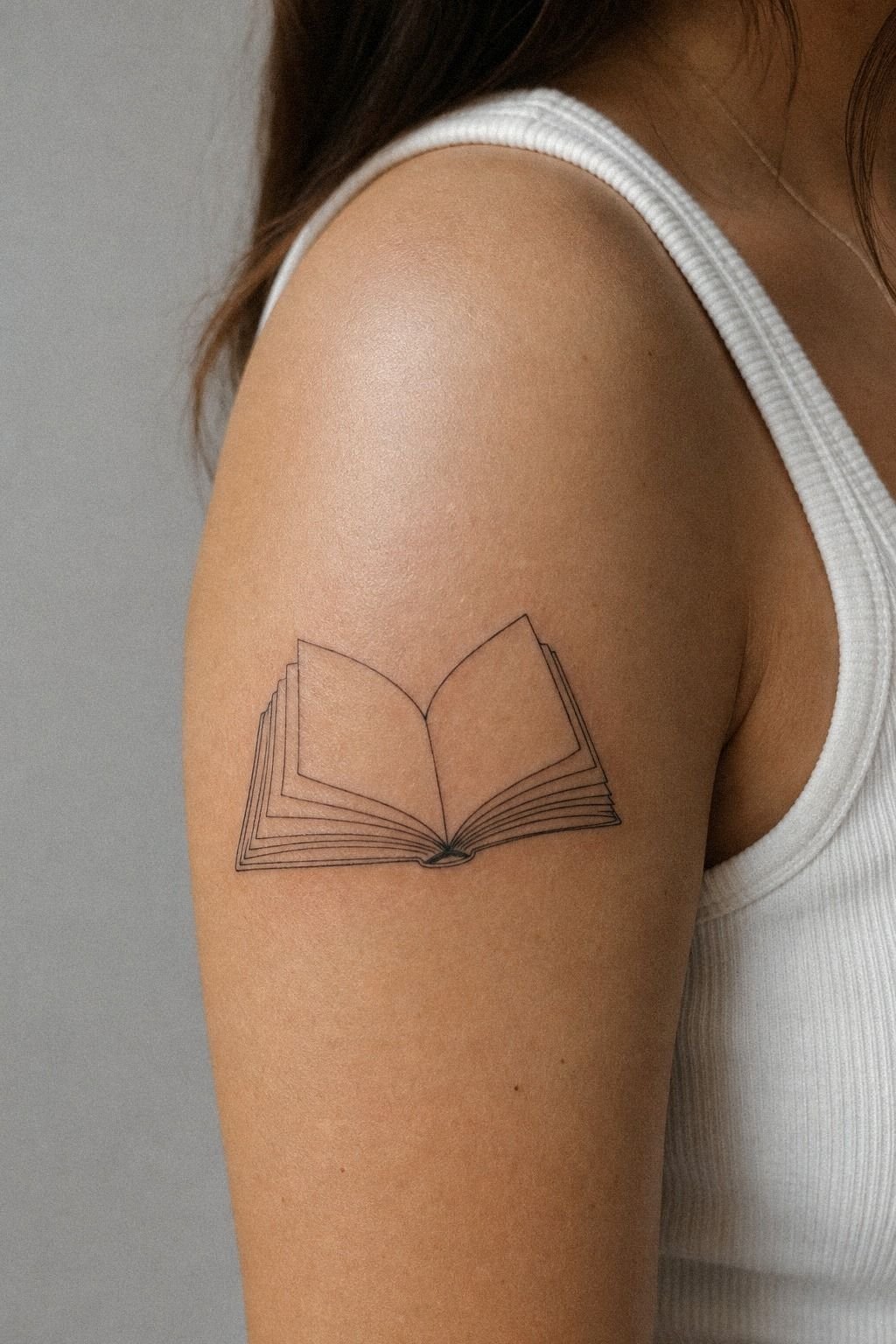
Go cleaner than you think on an upper arm outline. A macro close-up always shows the truth, and the truth is this: one clean pull beats ten fuzzy passes every time. If your artist cannot make the spine line crisp at stencil stage, I would not let them tattoo the pages at all.
Upper arm skin gives you a forgiving canvas, especially on medium warm ivory skin where healed black sits soft but still visible. Crispy linework matters more than detail count here.
The best design book outline is not packed. It is edited down until the silhouette reads at a glance.
I use what I call the Three-Read Rule with this kind of tattoo. It should read as a book from three feet away, show page shape up close, and still look intentional if your skin warms up during healing. But if the outline only works in a zoomed photo, it’s too precious.
This is also where portfolio shopping matters. Look for healed photos, not just fresh ones, in a custom tattoo design process article or artist portfolio you trust. You want to see settled lines, no blowout at the edge, and no patchy spots where the artist hesitated.
3Bookish Tattoo Design Book With Tiny Symbols
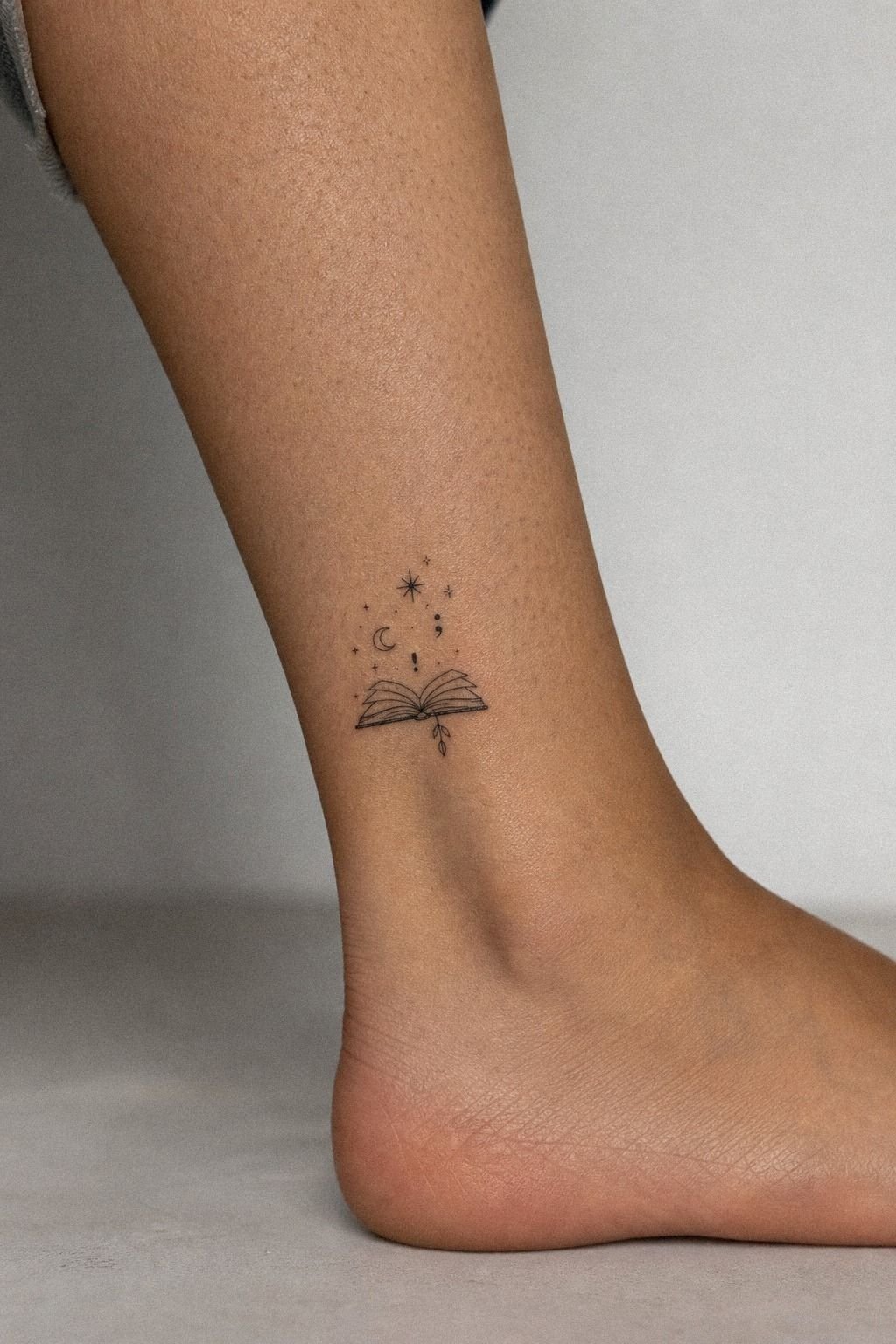
Layer a few tiny symbols around a bookish ankle tattoo, but keep the symbol count tight. A healed ankle piece on medium olive skin can look sweet for years if you choose icons with open shapes.
A star, a leaf, a crescent, one tiny bookmark charm. That’s enough!
Ankles are cute, but they are higher wear than people admit. Socks rub.
Shoes hit the edge. Summer sun cooks the area unless you are on top of SPF.
Healed black linework holds better here than pastel details, so I keep the symbols simple and push the contrast a little.
You also need more size than you think. I prefer at least 2.5 to 3 inches around the main book form, because tiny page corners collapse first. If you’re building a whole literary theme, tato design tattoo ideas can help you decide which symbols belong together and which ones just clutter the skin.
And here’s the trap. People treat ankle tattoos like jewelry, then ask for seven ideas inside one inch.
Do not. Tiny super-detailed turns to soup later, and the ankle is not where I’d test how much detail your artist can cram into a baby stencil.
4Why Does a Wrist Book Tattoo Need More Size?
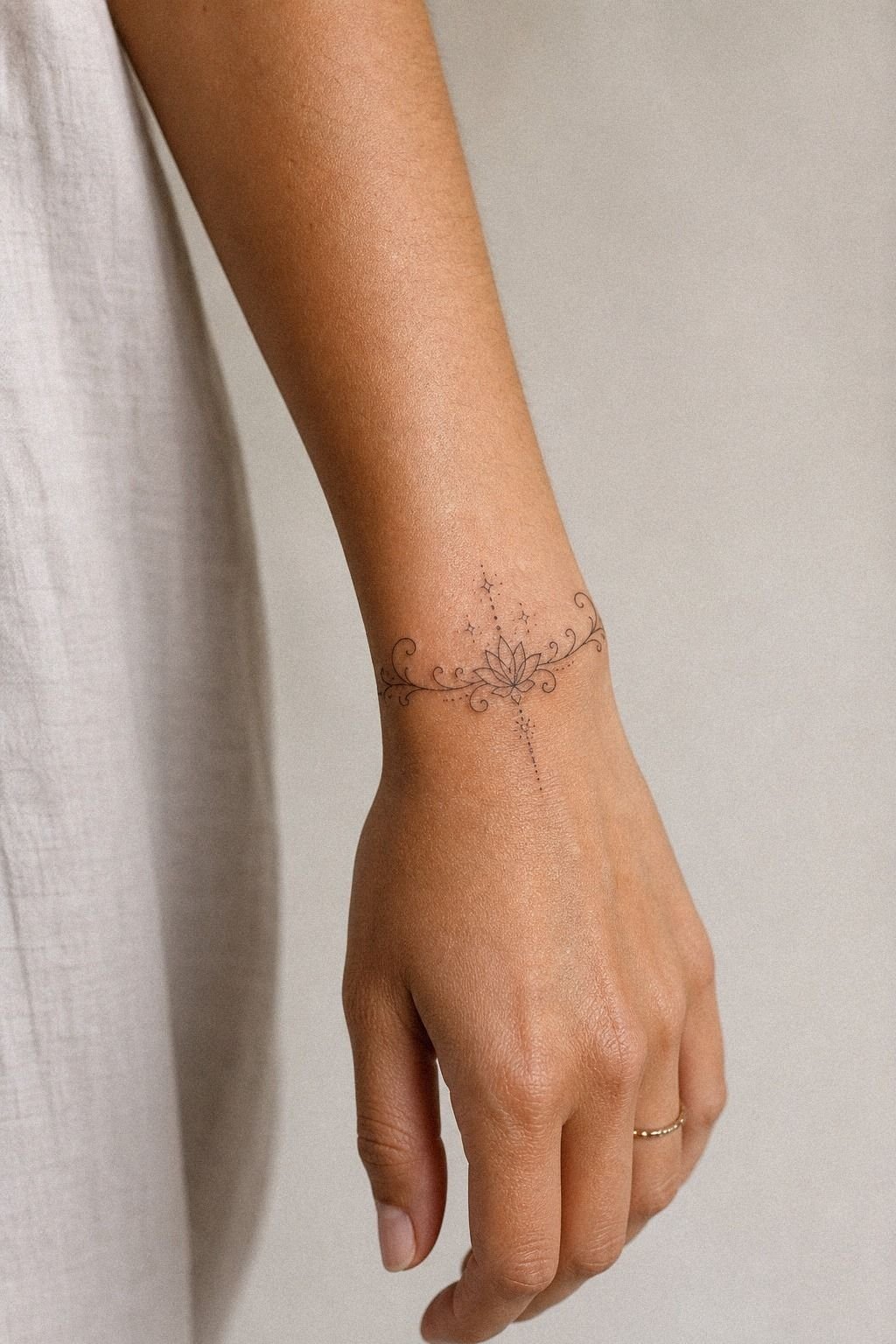
Wrap the shape with your wrist stencil instead of dropping a flat rectangle in the middle.
5Traditional Flash Tattoo Design Book Page
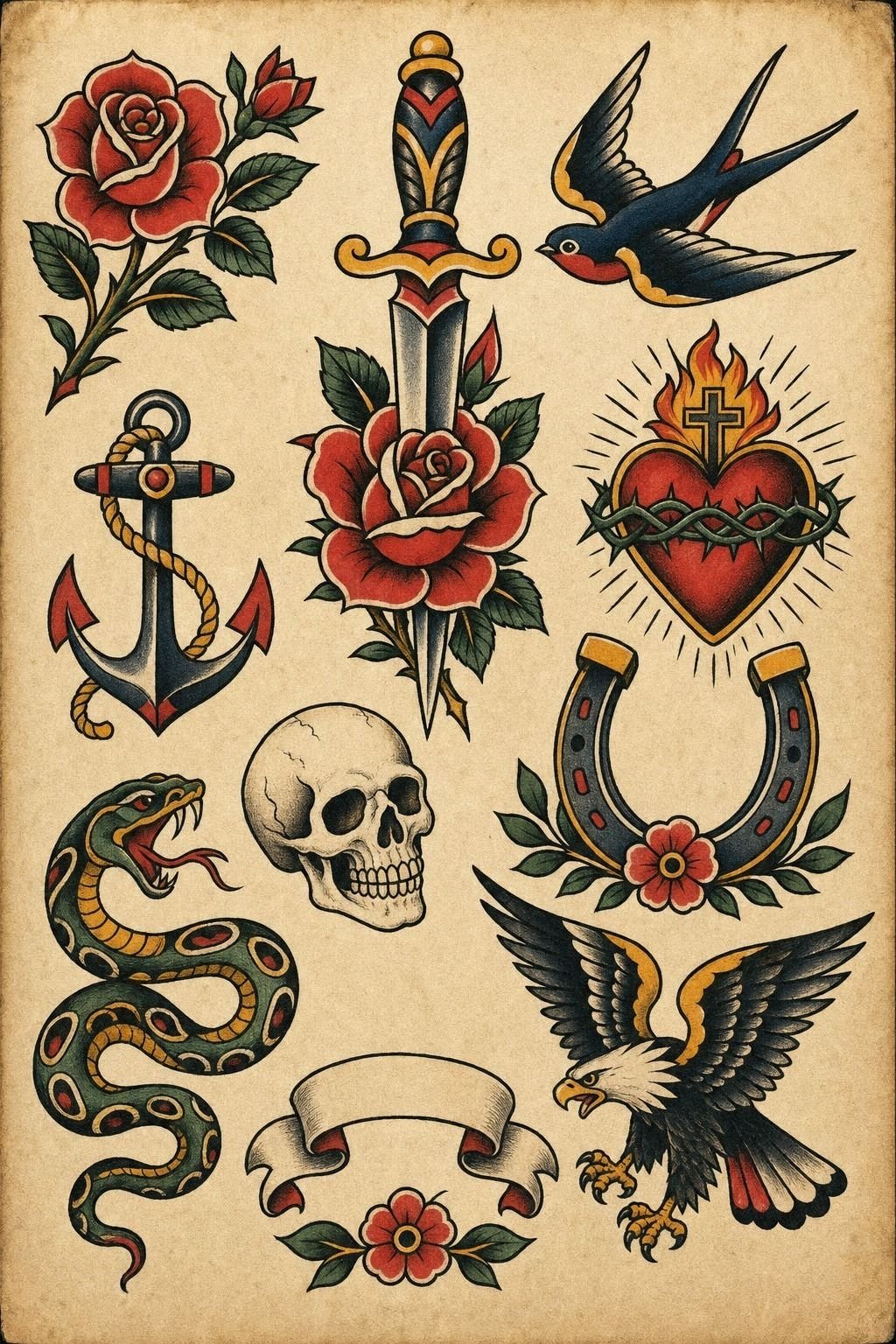
Pick a flash-page version if you want a book motif with more punch and less overthinking. A traditional sheet on aged off-white paper shows you what holds up: bold pages, simple banners, solid black, maybe one red accent. It is not subtle, and that’s the point.
American traditional has survived for a reason. Bold black outlines and limited color stay readable long after ultra-fine novelty tattoos blur. If your book idea leans magical, occult, or romantic, flash can give it stronger bones than a whisper-thin custom sketch.
I love a flash sheet because you can compare several versions side by side. One book with a dagger. One with a rose.
One with a candle drip. But I still tell people not to chase Pinterest-exact. Use references for vibe only, then pick the design that fits your skin, not your screenshot.
If you’re torn between custom and pre-drawn, look at tattoo design website ideas for more ways artists present options. Red accent ink can work on paper concepts, but I’d keep the final tattoo black-heavy if longevity is your top priority.
6Botanical Tattoo Design Book On Inner Arm
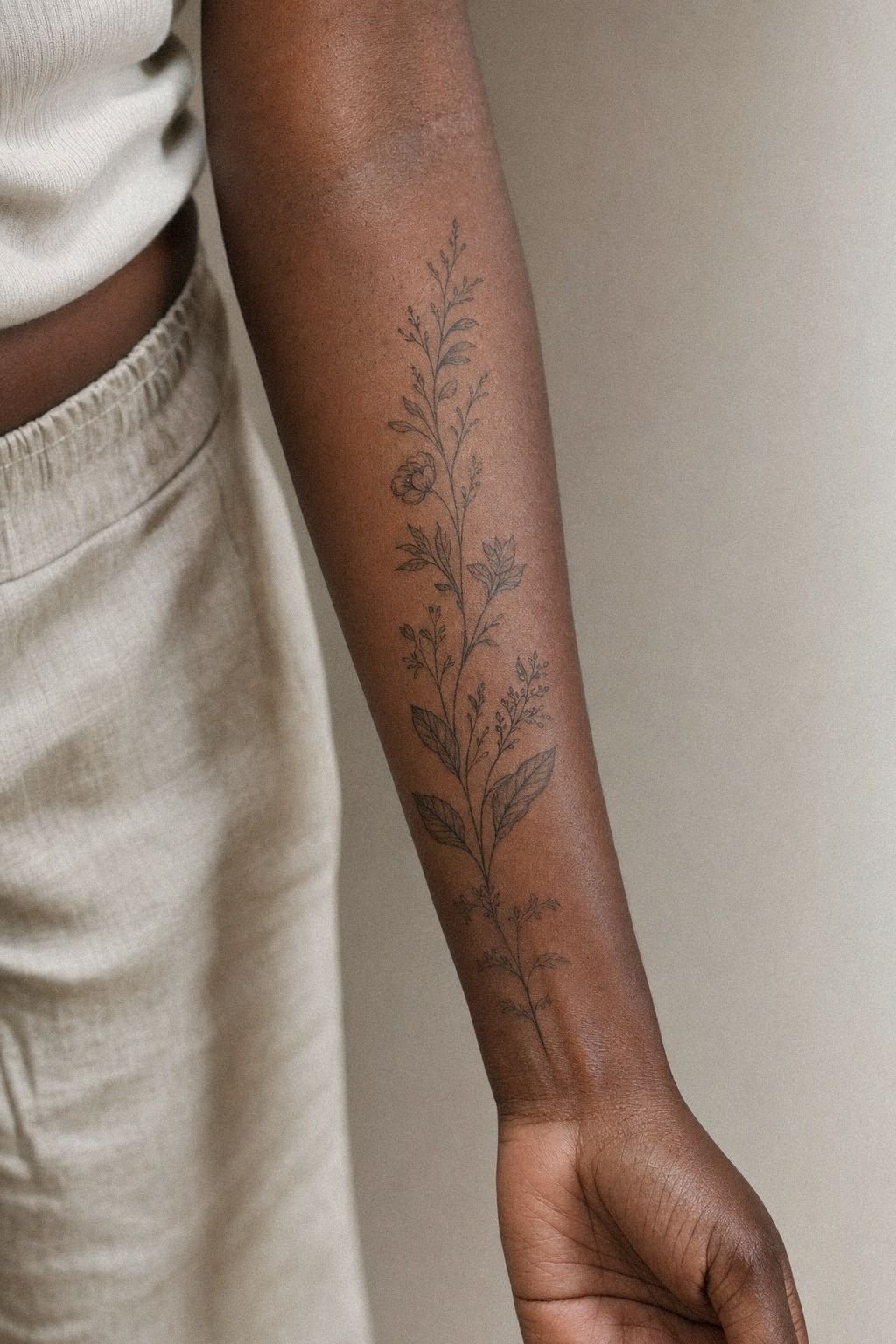
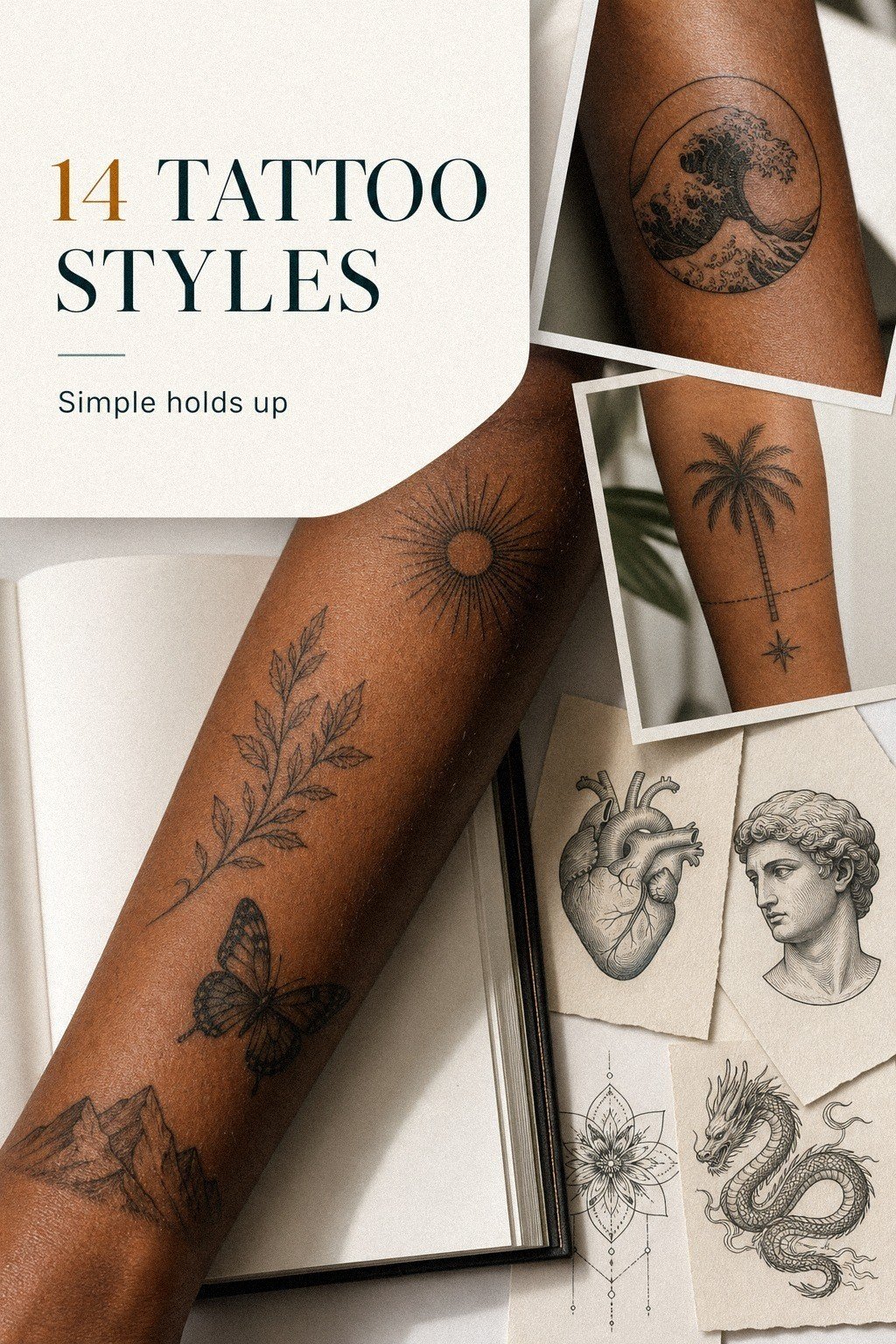
Anchor a floral book tattoo on the inner forearm when you want softness without losing structure. The open book gives you geometry, and the stems or leaves can break that geometry just enough to keep it organic. On deep ebony skin, that contrast looks clean when the artist leaves breathing gaps between the line groups.
Deep skin deserves intention, not timid tattooing. Rich black linework shows beautifully here when the artist commits to solid saturation and does not skate too lightly trying to keep it delicate. Fine line still works, but the line can’t be scared.
I like using botanical elements as page markers instead of stuffing the pages with tiny detail. A fern crossing one corner.
A poppy stem under the spine. A small branch trailing toward the wrist.
Crescent moon detailed tattoo design pairs especially well if you want a literary-meets-night-sky feel.
But keep the leaf texture open. Curved magnum shading isn’t necessary for every petal, and overworking that skin just to imitate pencil texture is a bad trade. You want a tattoo that heals velvety, not patchy, and the inner arm can get chewed up if the artist keeps scratching at the same spot.
7Blackwork Tattoo Design Book With Bold Lines
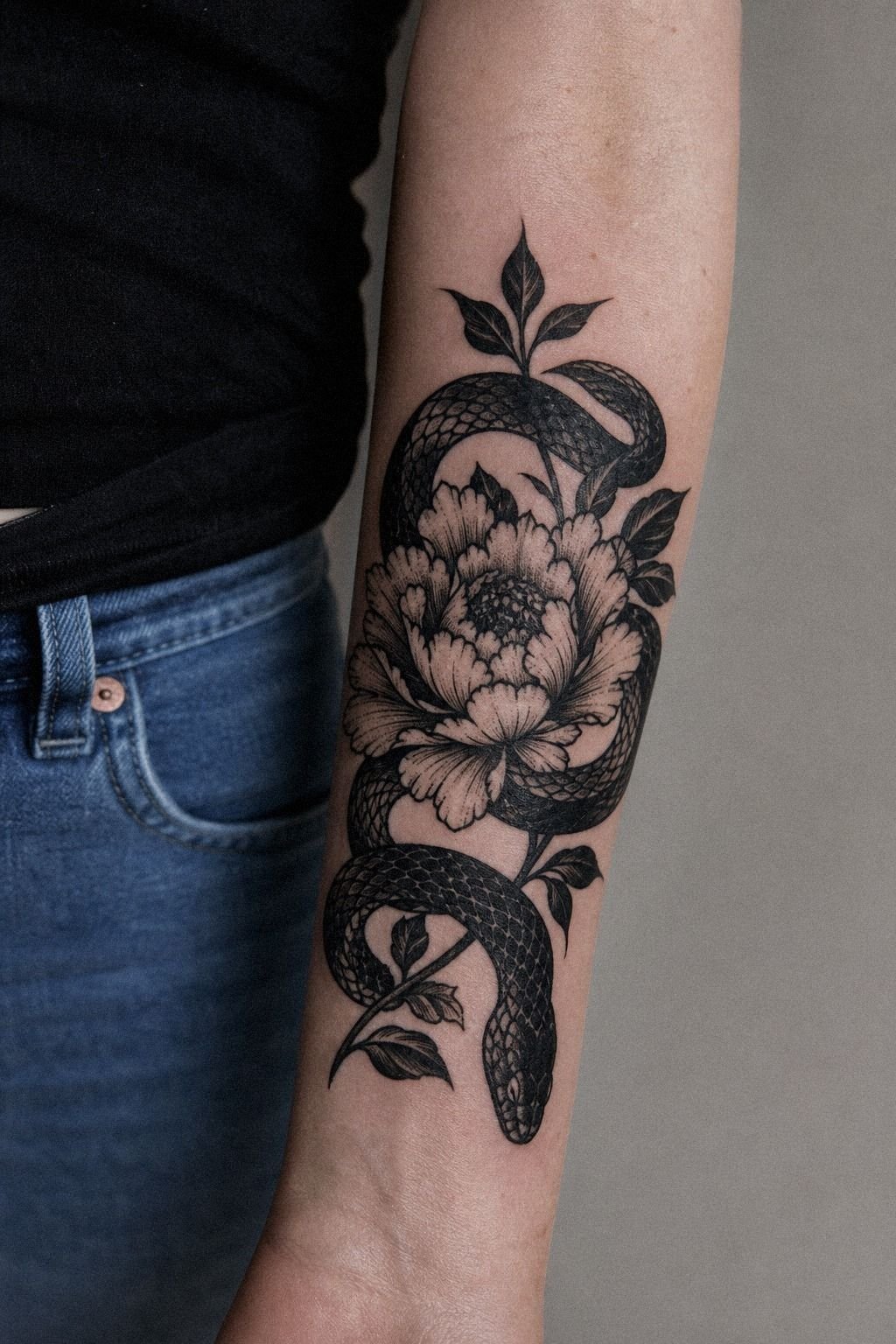
Choose blackwork if you want the book motif to hit harder from day one. A blackwork forearm piece on fair cool-pink skin fills the frame with confidence, and it doesn’t rely on fragile detail to make the point. When I say bold will hold, this is what I mean.
The page blocks can be mostly dark with pale cuts for the paper edges, or the cover can go nearly solid while the inner lines stay open. Packed black fill needs one solid pass with good stretch and clean machine control. If it takes endless touch-up strokes, the tattoo will heal angry.
This is where I use the Bold-Hold Ladder. First rung, heavy outline.
Second, clear negative cuts between page layers. Third, one focal symbol you can spot fast.
Want more scale planning? Create sleeve tattoo design helps if you’re turning a single book into part of a bigger arm story.
And yes, blackwork is usually less forgiving if your artist is a scratcher. Large liner needles show hesitation instantly, so look for saturated healed work before you book. Why gamble on timid blackwork when a confident artist will make the same motif age twice as clean?
8Watercolor Tattoo Design Book, But Keep It Anchored
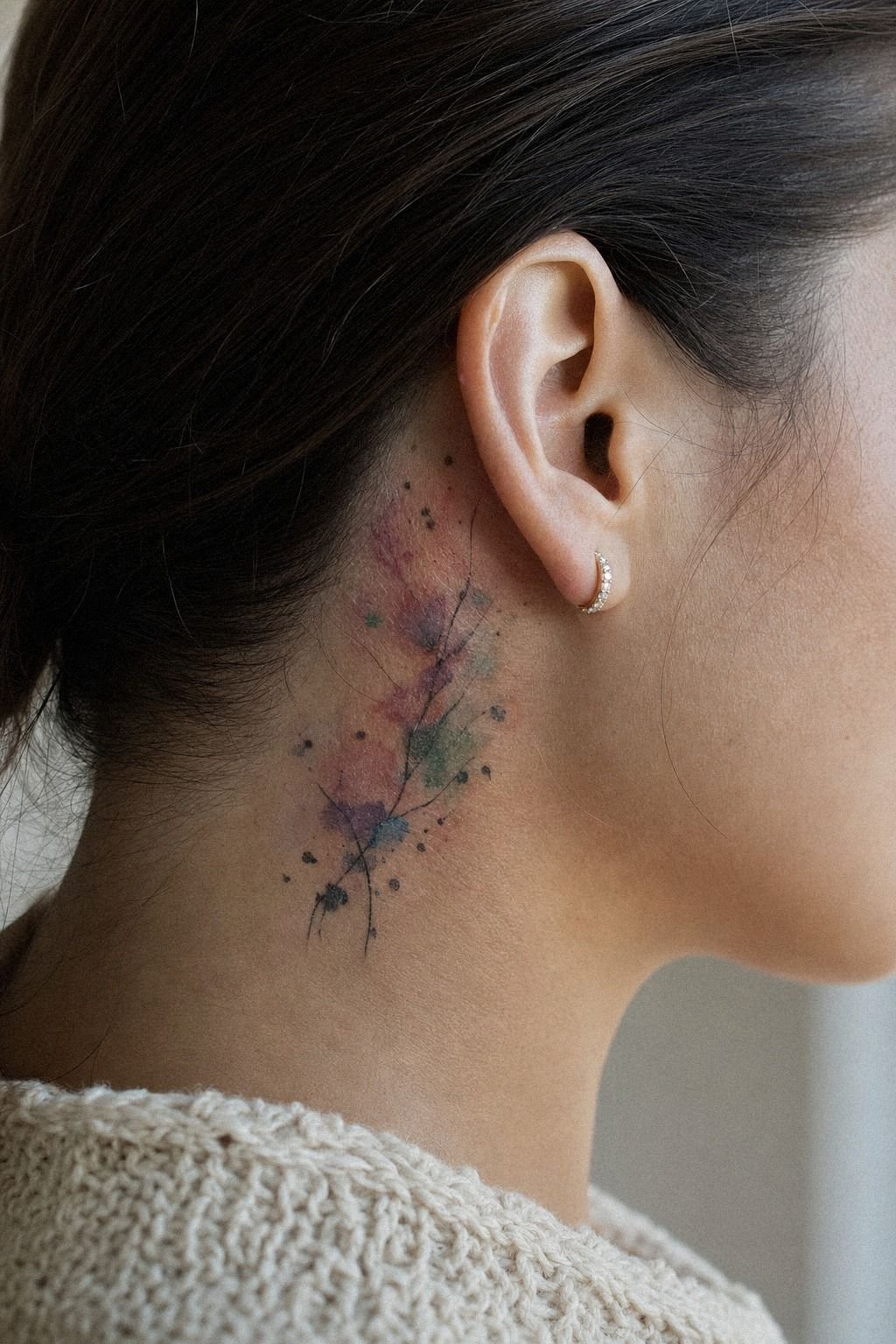
Keep watercolor behind the ear tiny, anchored, and disciplined.
9Minimal Tattoo Design Book Behind The Arm
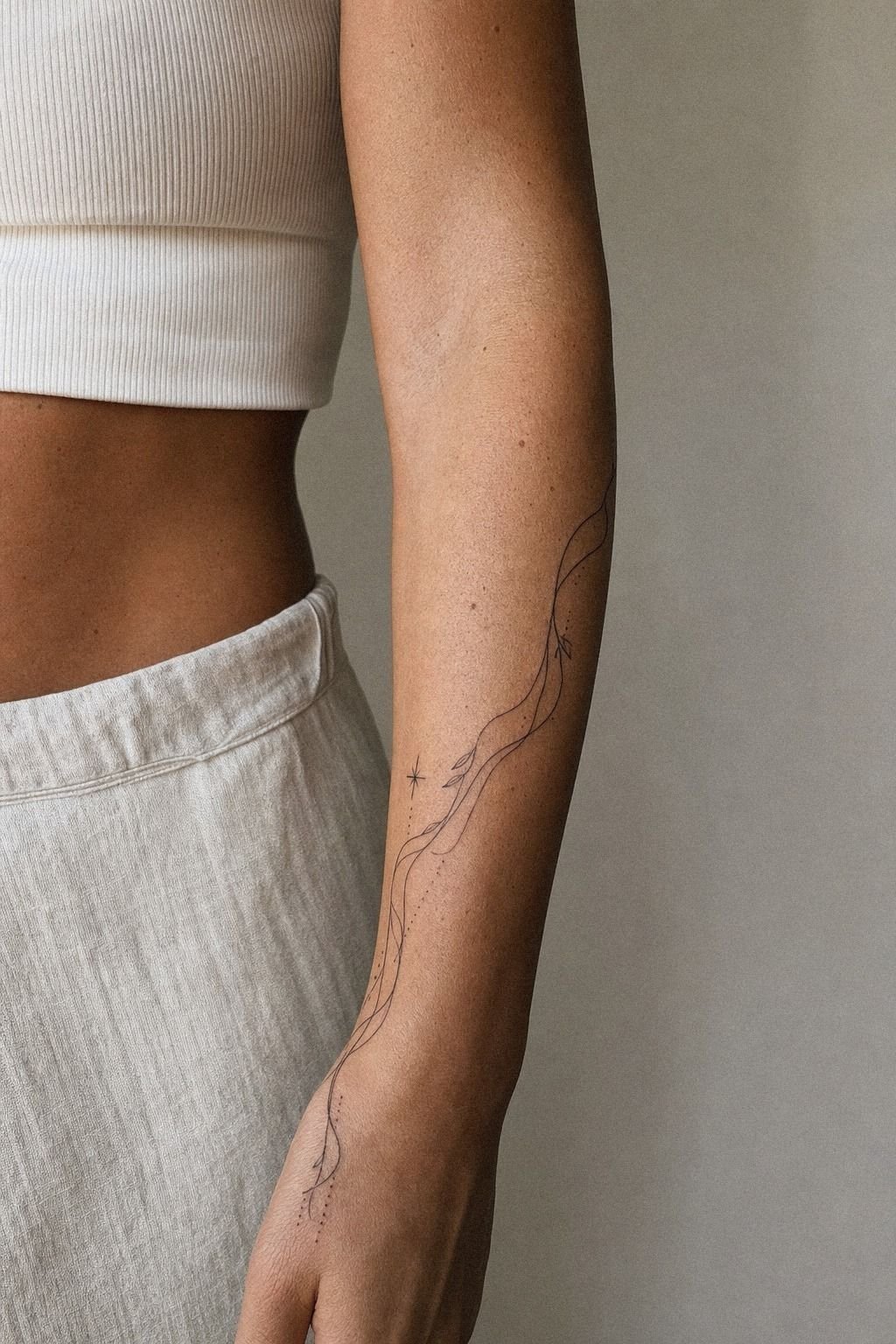
Strip it back on the back-of-forearm placement if you want a book tattoo that feels understated but not forgettable. This area lets the design peek when your arm turns, which makes the tattoo feel a little more personal. Minimal works here because the reveal is part of the charm.
I prefer one clean open-book shape, one page fold, and maybe a single tiny symbol near the bottom corner. Three-round liner work is enough for that if the artist has a steady hand. You don’t need ornamental noise to make the piece meaningful.
This is a smart placement if you want longevity without going huge. The skin is steadier than the hand, less spicy than ribs, and easier to protect during the first 2 to 3 weeks of surface healing. How to design your own tattoo is useful here because minimal tattoos fail when the concept isn’t edited hard enough.
And don’t confuse minimal with tiny. Open line spacing is the whole reason this style ages cute on you, so keep enough distance between the page edge, the symbol, and the outer contour. If every detail touches, the tattoo loses that clean pause that makes it elegant.
10What Matters More, Stencil or Healed Result?
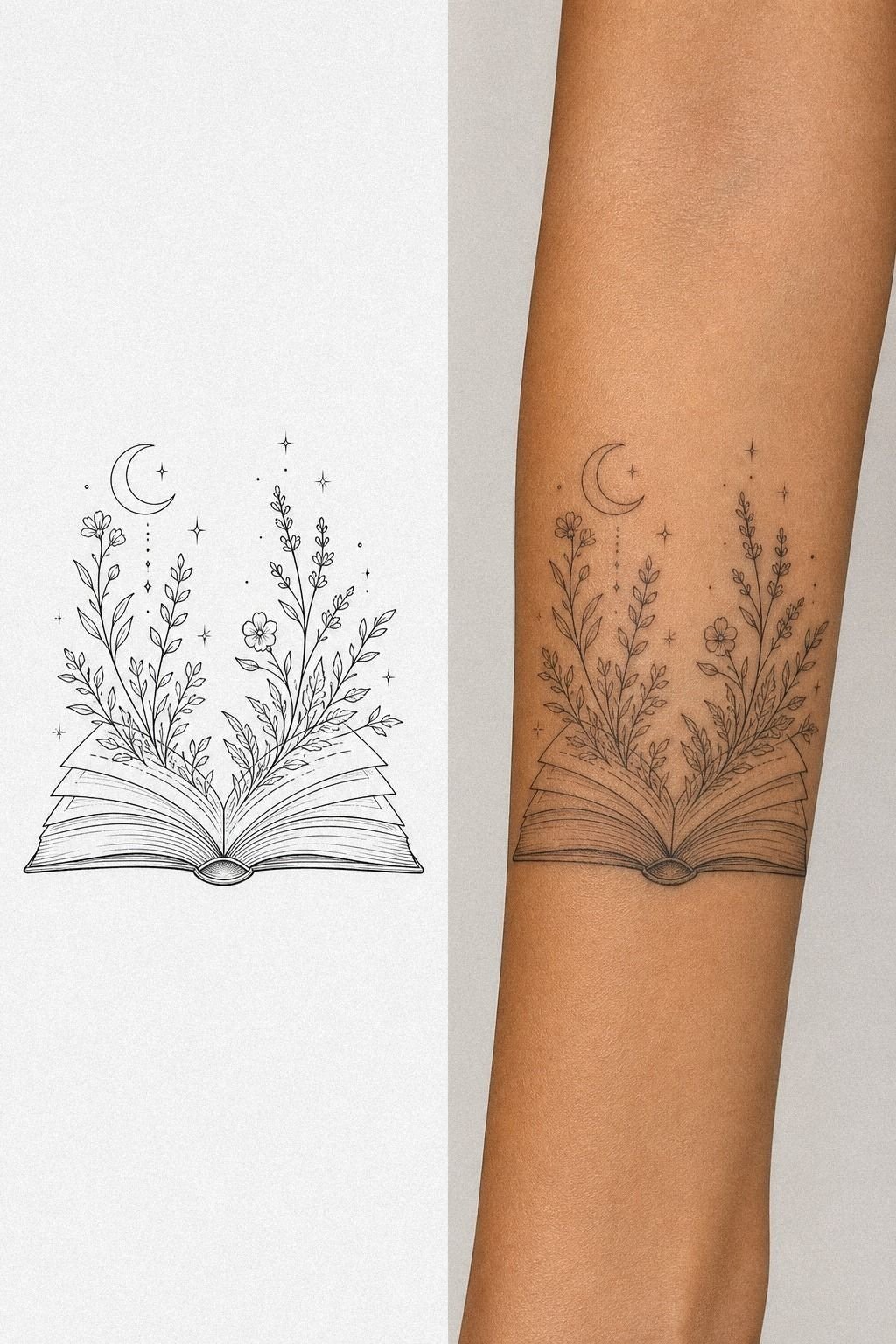
Compare stencil to healed result before you approve anything.
11Single Needle Tattoo Design Book Rib Ink
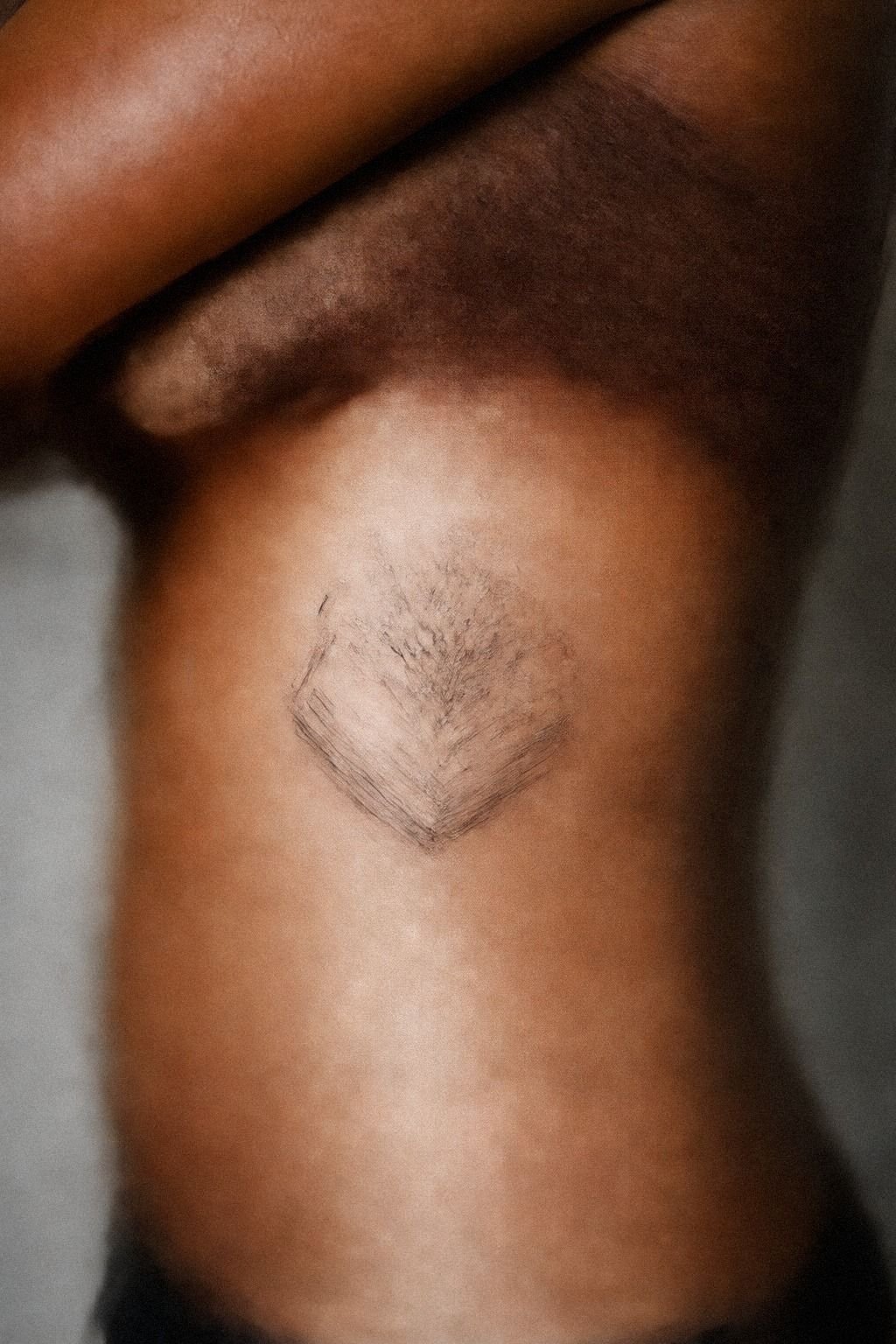
Place a single-needle book tattoo on the ribs only if you love the look enough to earn it. Rib pieces on deep brown skin can be insanely elegant, especially when the spine follows the body and the pages open with the curve. But this is a spicy placement, full stop.
Single needle shines when the design is restrained. One-needle linework can look almost pencil-soft fresh, and it heals beautifully when the artist keeps the pull clean and doesn’t go back over every pass. The second they overwork it, the skin tells on them.
Ribs also demand realistic sizing. I wouldn’t shrink a book motif below about 3 inches here, because the body movement and breath expansion already add enough visual tension. If you’re mapping more literary pieces nearby, create sleeve tattoo design can still help with storytelling flow even outside a literal sleeve.
And be honest with yourself about pain. Unscented wash and soft aftercare matter later, but during the session the hard part is sitting still while lines feel sharper and shading turns into a dull burn.
Tap out for five rather than pass out on me. That part matters!
12Moleskine-Inspired Tattoo Design Book Sleeve
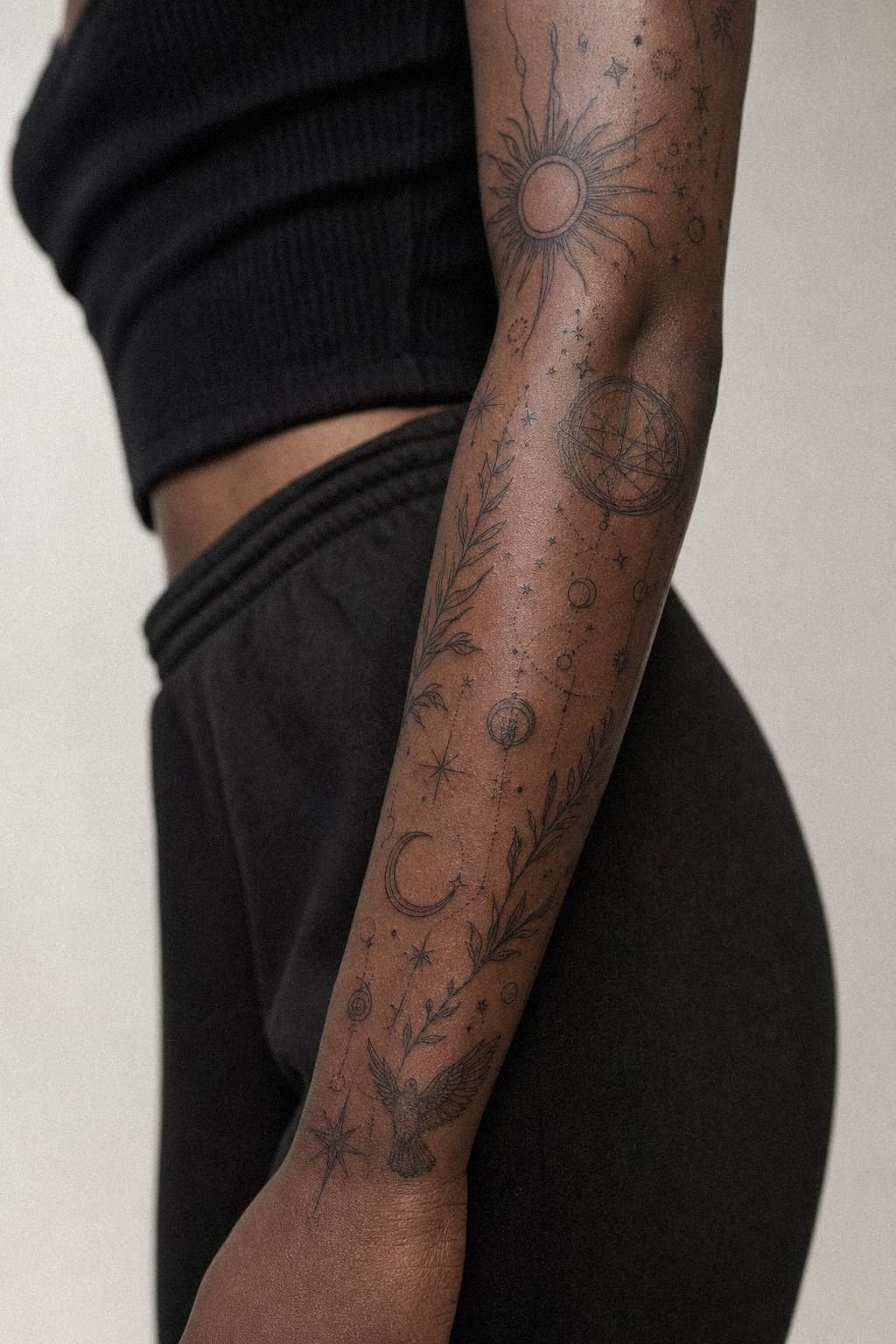
Build a forearm sleeve by repeating book-adjacent flash motifs instead of forcing one giant book illustration from wrist to elbow.
13Red Ink Tattoo Design Book Linework Versus Black
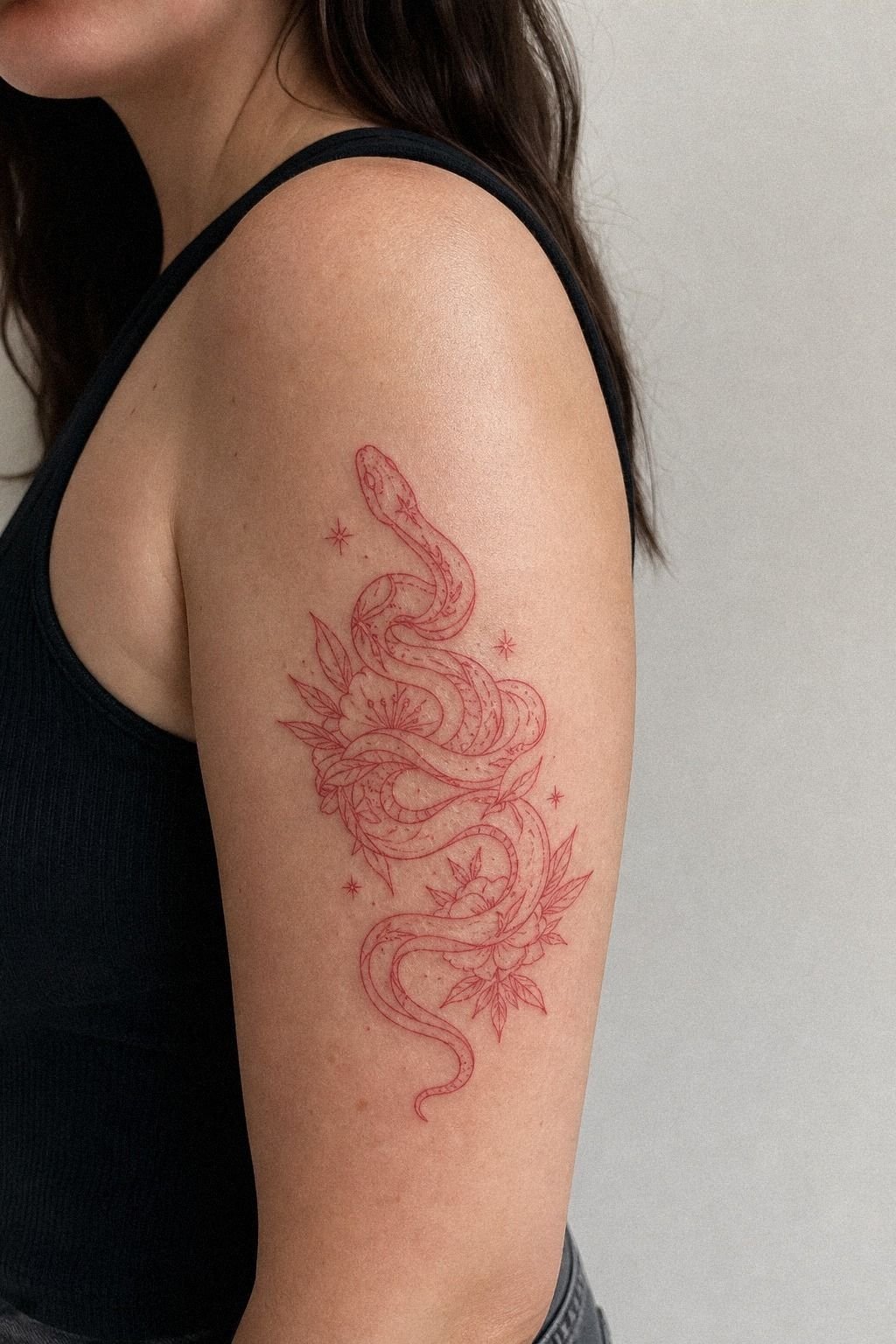
Use red ink for a book tattoo only when you want softness more than longevity. On the upper arm, healed red linework on fair cool-pink skin can look airy and romantic, especially for a bookworm tattoo with a simple outline. It photographs beautifully, but you need to know the trade-off.
Red usually heals lighter than black, and some reds fade faster depending on your skin, sun habits, and the exact pigment used. Red tattoo ink works best when the design is open and the line count stays low. I wouldn’t stack tiny symbols, page text, and soft shading into the same red-only piece.
Upper arm placement helps because it sees less friction than wrists or ankles, and touch-ups are easier there if you choose to refresh later. How much charge tattoo design is worth reading before you chase a color-led concept, because maintenance can matter as much as the first session price.
And patch testing is smart if you’ve never worn red before. Healed color samples from your artist matter here, because some red formulas stay clear and others drop off fast. Pretty is fine.
Predictable is better.
14Healed Tattoo Design Book With Soft Shading
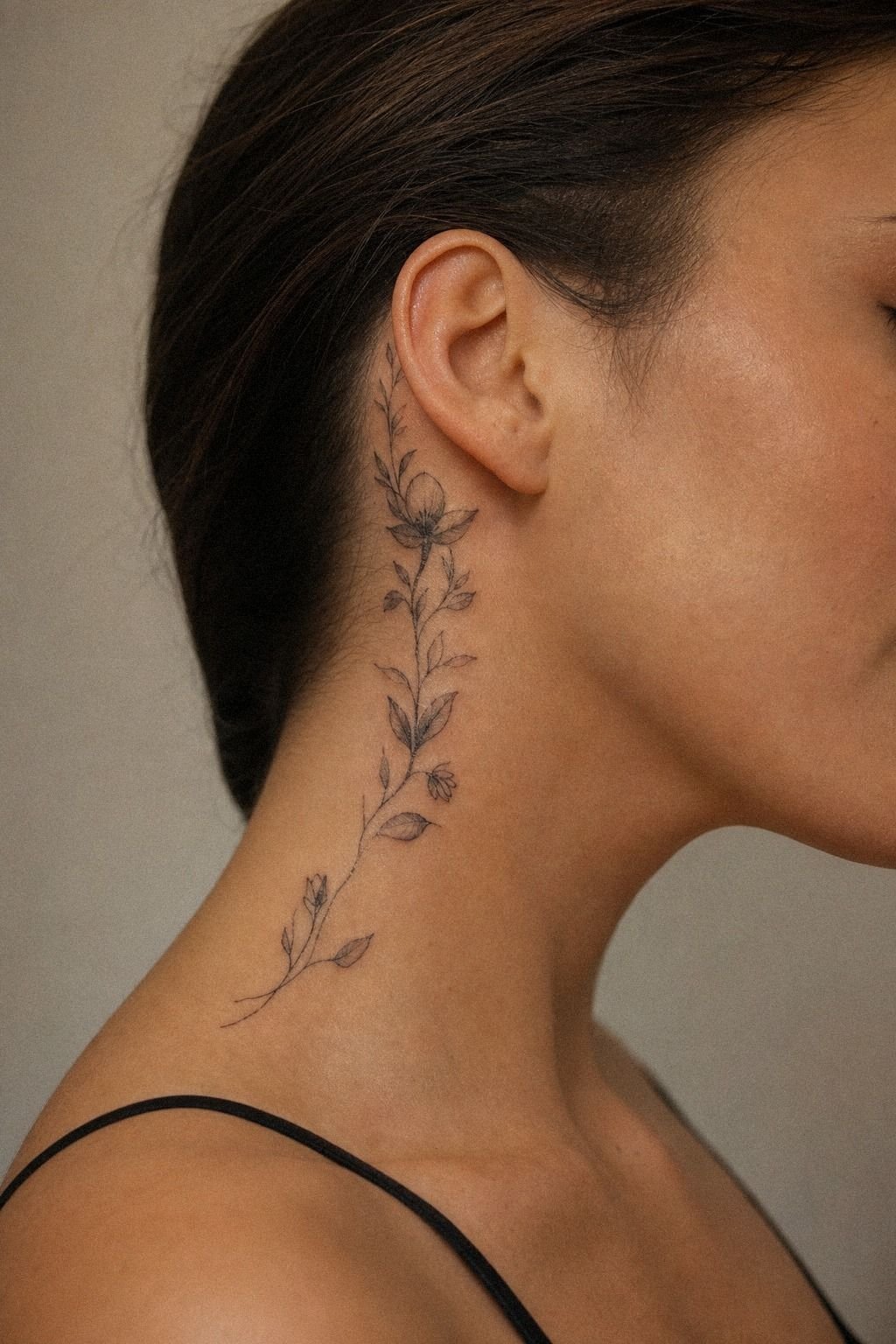
Finish with soft shading only after the linework is doing its job. A healed behind-the-ear book tattoo with light grey haze can look polished on medium warm ivory skin, but the shading should support the form, not rescue it. If the outline is weak, no amount of grey wash will save it.
Soft shading works best when it sits behind the page edges and under one focal detail, maybe a moon or a tiny bloom. Grey wash shading should heal velvety, not muddy, and that means keeping the tone light enough that your skin still shows through. Think whisper, not smoke cloud.
This spot also needs realistic aftercare. Hair, sweat, and sun can all interfere during the first 2 to 3 weeks, so wash gently, keep products off it, and skip pools until the surface closes. Design tattoo online free can help you preview whether a shaded version adds value or just adds noise.
But I’d still pick black-led linework over fancy softness if your goal is ten-year clarity. Simple healed contrast beats trendy atmosphere every time when the tattoo is this small and tucked into a curved placement.
The Two-Session Reality Check
If you want the short answer, tattoo design book pieces age well when you keep the concept readable, place it on steadier skin, and don’t undersize the linework. You should think about cost, session time, healing, and long-term value before you think about extra symbols.
Here’s the baseline I give clients in the US. Shop minimums often start around $50 to $100, hourly rates usually land around $100 to $250, and a small-to-medium fine line book tattoo commonly takes 1 to 2 hours. Larger sleeve planning can take more than one session.
And placement changes everything. Low-wear zones like outer forearm, upper arm, thigh, and calf usually age better than fingers, feet, or hands.
That’s not gatekeeping. It’s just the physics of friction, UV, and how skin moves day after day.
The Three-Read Rule I Use Before I Tattoo a Book Motif
I’ve redrawn more book tattoos than almost any other literary idea, and the reason is simple. People fall in love with symbolism first, then try to cram that symbolism into skin that has rules.
Skin isn’t paper. It stretches, peels, swells, tans, rubs on clothes, and softens every line a little with time.
So when a client brings me six references, I don’t ask which one is prettiest. I ask what the tattoo needs to say from a few feet away, what it should reveal up close, and what details they’re willing to lose if the piece has to be edited for longevity.
That three-step filter saves people from a ton of regret. It also saves them money, because the design gets stronger before the machine even turns on.
My honest opinion is that most bad book tattoos fail for one of three reasons. They’re too small.
They’re placed in a high-wear zone just because the photo looked cute. Or the artist chases fragile detail instead of strong structure.
You can fix all three before the appointment if you slow down and let the concept breathe.
I also think first-timers get weirdly scared of black ink. They assume softer means safer, when the opposite is often true.
A slightly bolder line on a steady forearm will usually age better than a whisper-thin line on the wrist, ankle, or behind the ear. And when that tattoo heals, you get clarity instead of guesswork.
What would I spend money on first? Better placement, cleaner linework, and an artist with healed photos.
Not fancy rendering. Not micro text.
Not ten little symbols proving how deep the idea is. Nobody sees your intention if the tattoo turns fuzzy in two years.
And here’s the part I wish more people heard before they book. A tattoo design book motif doesn’t need more detail to feel personal.
It needs better editing. One open page, one symbol, one confident contour.
That’s the piece that stays readable, heals nice, and still feels like you later on.
The Questions Worth Answering First
How much does a Tattoo Design Book usually cost?
Usually, a tattoo design book piece starts around a shop minimum of $50 to $100 for something very small, while many artists in the US charge about $100 to $250 an hour. Small forearm or upper-arm versions often land in a 1 to 2 hour session.
Are Tattoo Design Book a good idea for a first tattoo?
Yes, if you keep the design simple and place it on low-wear skin like the outer forearm or upper arm. You get cleaner healing, manageable pain, and a motif that still feels personal without asking your artist to cram too much detail into a tiny area.
How do I choose a tattoo artist for Tattoo Design Book?
Look for healed linework first, not just fresh photos. You want clean outlines, readable spacing, and a studio that shows solid hygiene. How to design your own tattoo and custom tattoo design process both help you show up with better references.
How much do Tattoo Design Book hurt?
Forearm, upper arm, and shoulder placements are usually more tolerable than ribs, feet, hands, or sternum. Lines feel sharper, shading feels like a dull burn, and color packing is often the spiciest part. Placement matters more than bravado.
How long does a Tattoo Design Book take to heal?
The surface usually settles in 2 to 3 weeks, while full healing underneath can take 2 to 3 months. Wash with gentle unscented soap, use a thin layer of aftercare product, don’t pick flakes, and stay out of pools and hard sun early on.
What’s the best placement for Tattoo Design Book?
Outer forearm and upper arm are the best first picks for most people because the skin is steadier, the linework reads clearly, and touch-ups are easier if you ever need one. Wrist and ankle can work, but they need simpler designs and more maintenance.
Start With the Three-Inch Rule
If I had to pick one, I’d start with Open Tattoo Design Book Forearm Tattoo. At three inches on outer forearm, pages keep shape and age cleaner. Pin it and read how to design your own tattoo.